Same Game, Different Universe: The Splintered Timeline Quietly Rewriting Live Sports
Picture this: you're watching your team on the couch, phone in hand, stadium scoreboard visible through a friend's shaky livestream on your laptop. The ball gets kicked. Three seconds later, your TV explodes with a goal graphic. Two seconds after that, your phone buzzes with a push notification. Your friend's stream? Still loading the cross that led to the chance.
Those weren't three moments. That was one moment — fractured across time.
This is the quiet crisis sitting underneath every major sporting event in America right now. And almost nobody is talking about it seriously.
One Play, A Dozen Different Realities
Let's be precise about what's actually happening here, because the mechanics matter.
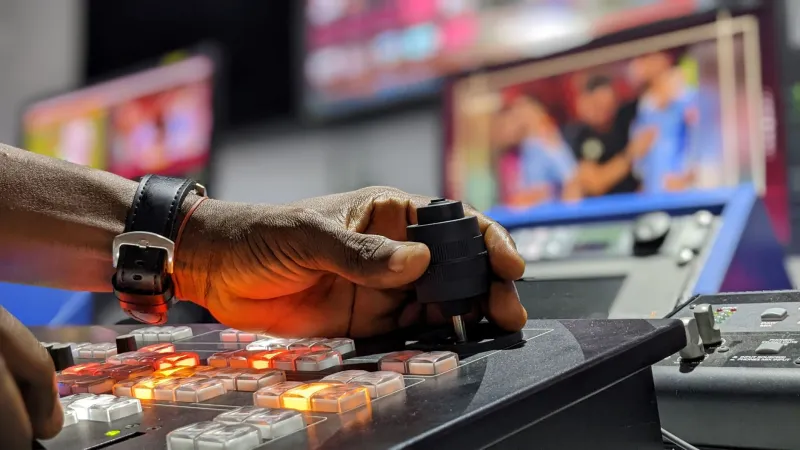
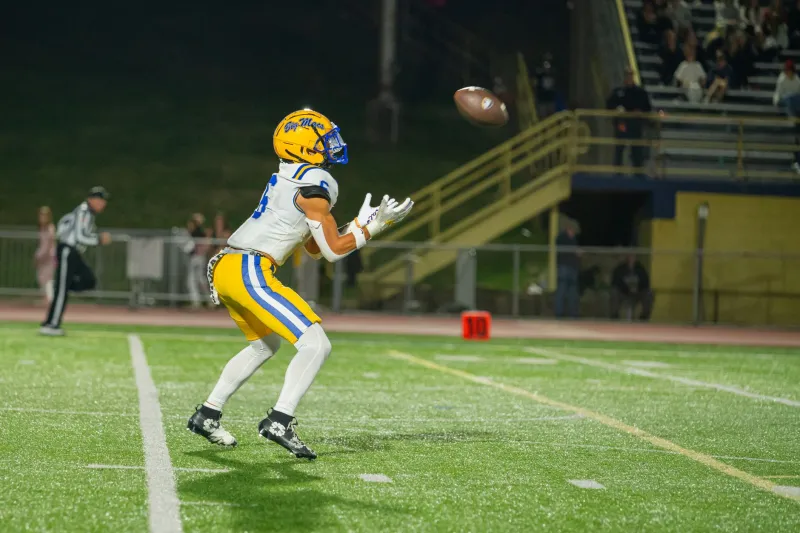
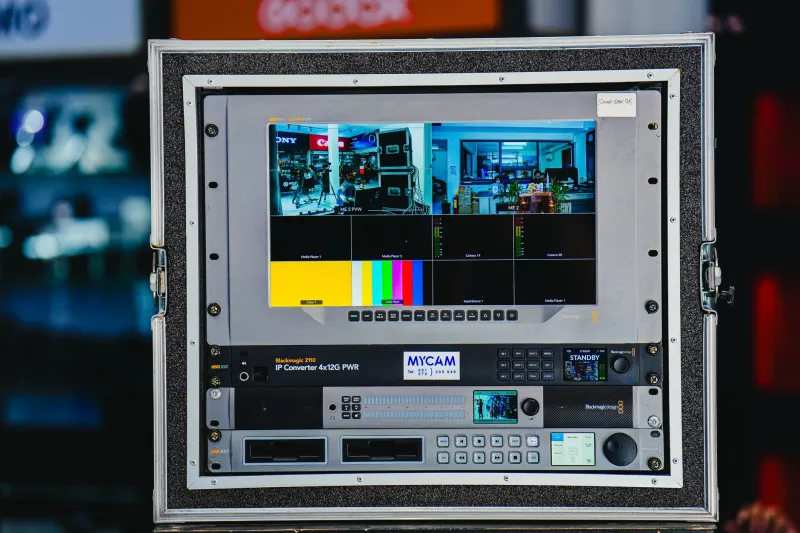
When a wide receiver makes a catch in an NFL stadium, or a striker buries a header in an MLS match, that event occurs once — in physical reality, at a specific timestamp. But from that single moment, a cascade of parallel timelines branches outward. The stadium's Jumbotron might show a replay within two to three seconds. The linear cable broadcast is running somewhere between six and twelve seconds behind real life. Your streaming app? Add another four to seven seconds on top of that, sometimes more depending on your ISP, the platform's buffer settings, and how many people in your zip code are watching the same feed.
Social media operates on its own chaotic schedule entirely. A fan sitting courtside or pitchside with a decent phone connection can post a clip before half your living room has even seen the play unfold.
So at any given moment during a major sporting event, there are viewers experiencing that game anywhere from live to nearly twenty seconds behind — all believing, completely reasonably, that they're watching it in real time.
The Betting Market Earthquake Nobody Wants to Admit
This is where things get genuinely uncomfortable for the sports industry.
In-play betting — wagering on outcomes while the game is actively happening — has exploded in the US since PASPA was struck down in 2018. States keep legalizing, platforms keep advertising during broadcasts, and the volume of live bets placed during games has grown into a multibillion-dollar slice of the overall market.
Here's the problem: the betting markets are trying to price events in real time, but "real time" doesn't actually exist uniformly.
Sportsbooks use a combination of automated data feeds, official league data partnerships, and their own risk-management algorithms to set and adjust live odds. Those data feeds are typically faster than any consumer broadcast — sometimes by ten to fifteen seconds. Which means the odds on your screen are already reacting to something you haven't seen yet.
If a goalkeeper gets injured in the 67th minute, the odds on the opposing team shift before most streaming viewers see the goalkeeper go down. Sharp bettors with access to faster feeds — or, frankly, anyone physically present in the stadium — have a structural information advantage that the average fan on a cable delay simply cannot overcome.
This isn't a conspiracy. It's physics meeting infrastructure meeting commerce, and the result is a playing field that's anything but level.
What Players Are Actually Reacting To
Here's an angle that rarely gets explored: the delay problem isn't just a viewer issue. It reaches into the stadium itself in ways that affect how games are played.
Modern athletes are acutely aware of crowd noise as real-time feedback. A roar from the stands tells a goalkeeper something went wrong behind him. A sudden hush tells a quarterback his receiver dropped it. But when fans in the upper deck are watching the stadium's own video board — which itself runs on a slight delay for replay processing — their reactions can become desynchronized from the live action on the field.
Coaches working from sideline tablets connected to in-stadium networks sometimes see replay angles before the crowd has finished reacting to the original play. That creates a strange layering effect where the coaching staff is operating in one temporal reality while the players on the field, responding to crowd cues, are operating in another.
Soccer managers have mentioned, almost in passing, that they've started filtering out crowd noise as a tactical signal because it's become unreliable. When 60,000 people are half-watching a phone and half-watching the pitch, the crowd's collective response to a moment is no longer a clean, synchronized data point.
The Social Media Spoiler Problem Has Gotten Structural
Anyone who's tried to watch a game on a DVR delay while staying on Twitter knows the pain of the accidental spoiler. But what's less understood is that this problem has become architectural rather than accidental.
Platforms like X (formerly Twitter), Instagram, and TikTok are now so deeply embedded in the sports-watching experience that they function as a parallel broadcast. Fan accounts with stadium access post clips in near real-time. Official league accounts post highlight graphics within seconds of a score. Algorithms serve that content to followers regardless of whether those followers are watching live.
The result is that a significant portion of the viewing audience now experiences major sports moments twice: once through the spoiler on their phone, and once through the broadcast catching up. The emotional peak — the surprise, the shock, the pure joy of seeing something happen for the first time — is increasingly being consumed in low-resolution vertical video before the HD broadcast even delivers it.
Sports leagues have been slow to reckon with this. Some have experimented with social media blackout windows during live events, but enforcement is essentially impossible and the incentives all run the other direction. Viral moments drive engagement, engagement drives sponsorship value, and sponsorship value funds the whole enterprise.
Is There a Version of This That Gets Fixed?
Honestly, the full problem probably doesn't get solved — at least not soon. The infrastructure gap between what's technically possible and what's economically practical for mass consumer delivery is still enormous. Ultra-low latency streaming exists, but it's expensive and doesn't scale cleanly to millions of simultaneous viewers.
What could improve is transparency. Some streaming platforms have started displaying latency indicators, letting viewers know roughly how far behind live they're watching. That's a start. A few sportsbooks have begun offering "broadcast delay" warnings on in-play markets, essentially telling bettors that the odds they're seeing may already reflect information their feed hasn't shown them.
Leagues could push for standardized data-release timing that aligns more closely with broadcast delivery rather than raw event occurrence. It won't be perfect, but it would at least narrow the advantage gap between different classes of viewer.
The Uncomfortable Truth at the Center of All This
What the splintered timeline really reveals is that "watching the game live" has become a fiction we've all agreed to maintain. There is no single, shared live experience of a major sporting event anymore. There are dozens of them, staggered across seconds and sometimes minutes, shaped by your cable provider, your streaming platform, your phone carrier, and whether you happen to be sitting in the stadium.
For casual fans, this is mostly just a minor annoyance — the spoiler, the delayed celebration, the notification that beats the broadcast. But for bettors, for coaches, for the athletes themselves, the fractured timeline is a real competitive variable. It's shaping outcomes in ways that the sports industry has barely begun to measure.
At FirstKick Live, we're built around the idea that every moment matters. But moments, it turns out, don't arrive at the same time for everyone. And that gap — that phantom second between what happened and what you saw — is getting harder to ignore.