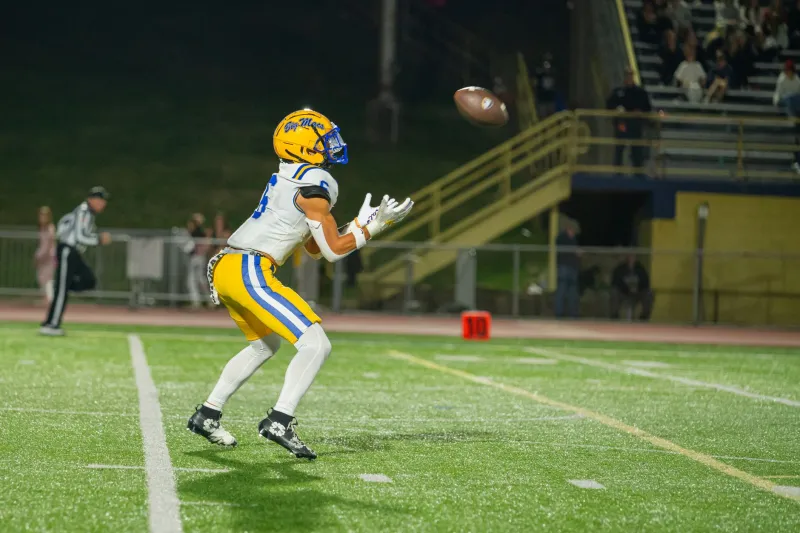
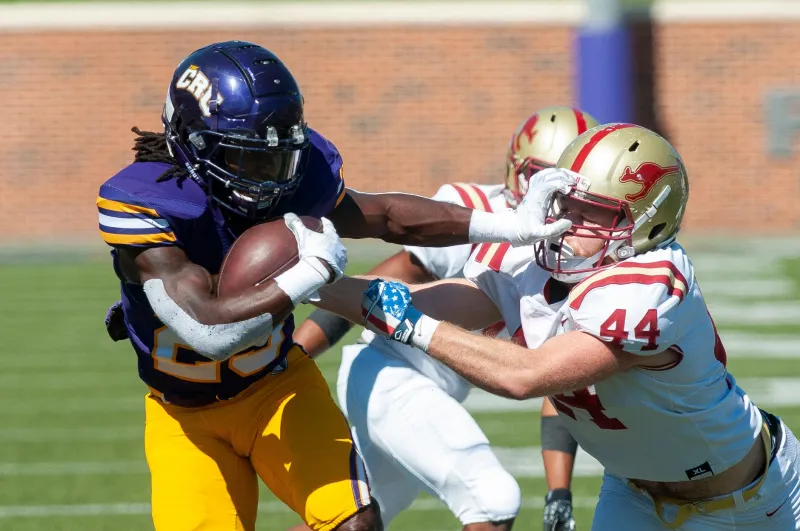
Caught Looking the Wrong Way: How Broadcast Cameras Keep Missing the Play That Actually Matters
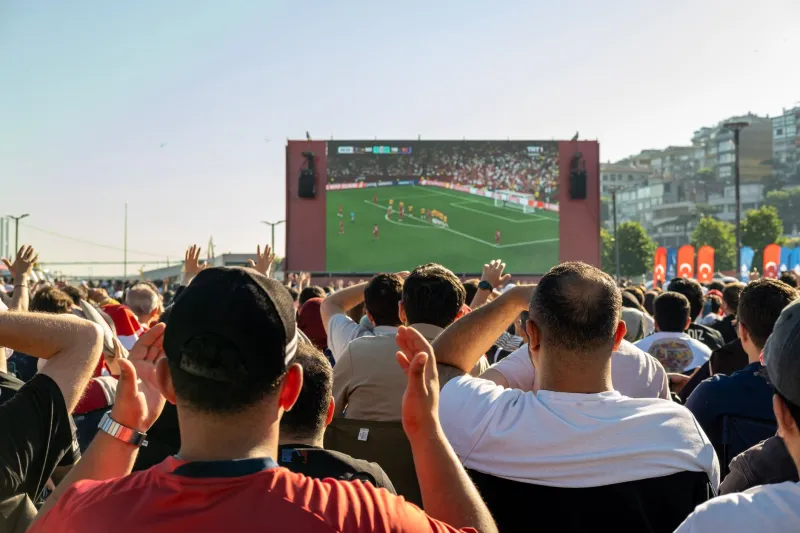
You've been there. The crowd erupts. Your buddy in the upper deck is already losing his mind. And you're sitting at home staring at a tight shot of a running back's shoulder pads while whatever actually happened disappears somewhere off the left edge of your screen.
Then, about twelve seconds later, your phone buzzes. Someone on X posted the clip from a different angle — probably a fan with a camera phone sitting in Section 114 — and that's where you finally see the play. The real play. The one the broadcast completely whiffed on.
This isn't a glitch. It's a system working exactly as designed, just not necessarily for you.
The Human Behind the Cut
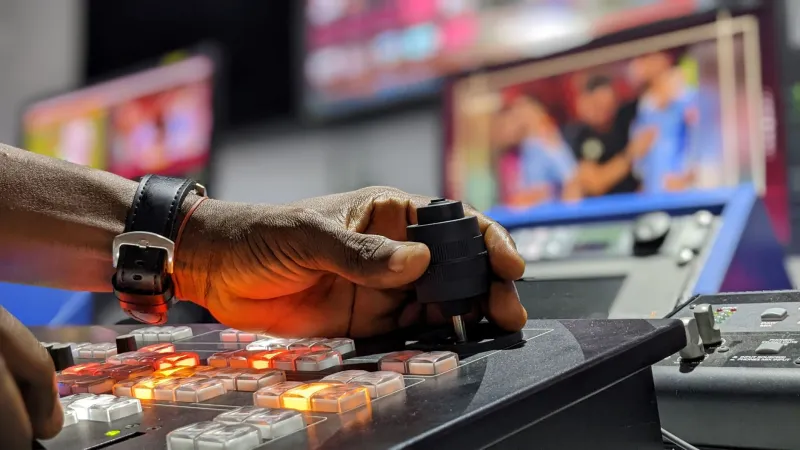
Every live sports broadcast runs through a central nervous system called the production truck, and at the core of that truck sits a director whose entire job is making real-time decisions about which of a dozen or more camera feeds to put on your screen at any given moment. These aren't casual choices. Each cut happens in roughly half a second, often before the director even consciously registers what they're seeing.
Broadcast directors are trained to follow what's called the "ball and story" principle — keep the primary action centered and anticipate narrative moments like celebrations, coach reactions, and replays. The problem is that in football, soccer, and most athletic events, the actual decisive moment frequently happens away from the ball. A linebacker dropping into coverage. A winger making a run that stretches the entire defensive shape. A safety rotating late.
By the time the camera operator tracking that secondary action realizes something significant is developing, the director has already committed to a different feed.
Why Soccer Gets Hit Hardest
In the NFL, the field is relatively contained and the ball moves in structured, somewhat predictable patterns. Soccer is a different beast entirely. The pitch is enormous, transitions happen in fractions of a second, and the most important movement on any given possession might be happening on the complete opposite side of the field from where the ball currently sits.
MLS broadcasts, Champions League coverage on Paramount+, Premier League games on Peacock — they all face the same fundamental tension. The wide shot gives you context but loses detail. The tight shot gives you emotion but destroys spatial awareness. Directors are constantly toggling between the two, and in that toggle, entire sequences of buildup play simply vanish.
Take a standard counter-attack. A goalkeeper distributes quickly. A center midfielder receives and immediately releases with one touch. A forward is already in behind the defensive line. If the camera is still on the goalkeeper when that first touch happens — which it often is, because the director wants to show the "source" of the attack — the viewer misses the midfielder's decision entirely. By the time the feed cuts wide, the forward is already isolated and the "why" of the whole sequence is gone.
The Social Media Inversion
Here's where things get genuinely interesting from a fan experience standpoint. Stadium-goers with smartphones have, almost accidentally, created a parallel broadcast infrastructure. Someone in the upper bowl with a wide-angle view captures the full sequence. Someone behind the goal sees the goalkeeper's positioning before the shot. Someone on the sideline gets the receiver's route in full.
These clips hit social platforms — X, TikTok, Instagram Reels — within seconds of the play ending. And increasingly, fans watching at home are experiencing a strange inversion: the official broadcast delivers the sanitized, editorially-curated version of events, while the crowd-sourced footage delivers the actual tactical reality.
This isn't hypothetical. During multiple high-profile matches and games over the last two seasons, viral clips originating from fan cameras showed plays that the primary broadcast had either missed entirely or shown from an angle that obscured the key action. Sports media analysts started calling this the "second-screen correction" — the phenomenon where the unofficial record fixes the official one.
The Technology Trying to Close the Gap
Broadcasters are aware of this problem. Several networks have invested in AI-assisted camera switching systems that use player-tracking data to predict where significant action is likely to develop and pre-position feeds accordingly. The technology is genuinely impressive in controlled conditions.
But live sports isn't a controlled condition. Player tracking data runs on a slight delay. AI systems trained on historical patterns struggle with genuinely novel plays — which, almost by definition, are the ones worth capturing. And the sheer volume of simultaneous action on a soccer pitch or an NFL field during a live snap still overwhelms any automated system's ability to prioritize correctly every single time.
Some productions have experimented with offering secondary streams — a "tactical camera" feed or an end-zone angle running concurrently — available to subscribers on their apps. This is probably the most honest solution: acknowledge that one camera can't tell the whole story and give viewers the tools to construct their own.
What This Means for the Betting World
There's a downstream effect here that doesn't get discussed enough, especially for the growing US sports betting audience. When you're watching a live stream and placing in-game wagers, the picture you're seeing is already delayed by several seconds due to stream compression. Add the broadcast's own editorial blind spots, and you're making decisions based on an incomplete, slightly-in-the-past version of events.
A sharp bettor who understands that the broadcast is structurally likely to miss certain types of plays — specific formation shifts, pre-snap motion in football, wide defensive positioning in soccer — has a real informational edge if they're supplementing the main feed with secondary angles or live data overlays. The gap between what the broadcast shows and what's actually happening isn't just an aesthetic frustration. It has real stakes.
The Play You Didn't See Shaped the Game You Did
Here's the part that should genuinely bother any serious sports fan: the moments that get cut off aren't random. They tend to be the moments of highest tactical complexity — the plays that require spatial context to understand. Celebrations get shown in full. Replays of scoring plays get multiple angles. But the sequence of movement and decision-making that created the scoring play? Often gone.
This shapes how we understand the sport at a fundamental level. Fans absorb narratives from broadcasts. If the broadcast consistently frames soccer goals as individual moments of brilliance rather than the product of coordinated movement across the entire pitch, that's the story fans internalize. If NFL highlights always cut to the receiver catching the ball rather than the route combination that created the separation, viewers develop a distorted sense of what actually wins football games.
The camera doesn't just capture sports. It constructs the version of sports that millions of people believe they watched.
Next time your feed cuts at the wrong second, don't just reach for the remote. Reach for your phone. Somewhere in the crowd, someone probably caught what the broadcast missed. And that clip might tell you more about the game than everything else you watched combined.