Home Fans Missed the Touchdown Their TV Already Celebrated
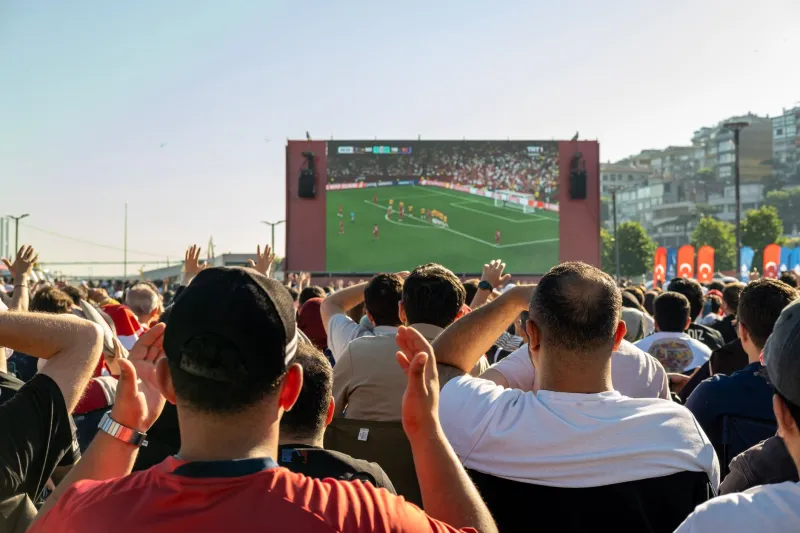
Picture this: It's fourth quarter, your team punches it in from the two-yard line, and you're watching from your couch in Cleveland. You lose your mind. You're texting your buddy who's sitting in the actual stadium — and he doesn't respond for another three seconds because, from where he's standing, the play hasn't fully registered yet. The scoreboard hasn't flipped. The crowd hasn't erupted. You, the person eating nachos in sweatpants, knew before the 70,000 people who paid $200 a ticket.
That's not a glitch. That's the modern sports experience in a nutshell.
The Signal Has to Go Somewhere First
Let's start with the basics, because the infrastructure behind a live NFL or MLS broadcast is genuinely wild. When a receiver hauls in a touchdown pass, the cameras capturing that moment aren't beaming images directly into your TV. That footage travels to a production truck, gets encoded, bounces to a satellite or fiber uplink, hits a network operations center, gets processed again, and then flows through your cable provider or streaming service before it ever touches your screen.
Each one of those steps costs time. Not a lot of time — we're talking fractions of a second to a few seconds — but in sports, fractions of seconds are everything. Traditional cable broadcasts carry a delay of roughly 1.5 to 7 seconds depending on the network and compression settings. Streaming platforms? Those can push delays anywhere from 10 to 45 seconds, sometimes longer during high-traffic events when servers are straining under load.
Meanwhile, the stadium PA system and the massive video boards inside the venue are running on a near-zero delay loop. What the camera sees is essentially what the board shows. So the 70,000 people in the building are operating in something close to real time. Everyone else? They're living slightly in the past.
Why the Stadium Feels Slower Than Your Couch
Here's the irony that still blows people's minds: being physically present at a game doesn't mean you experience it faster. In terms of information delivery, the opposite is often true.
Inside a stadium, your sightlines are fixed. You might be in the upper deck at a bad angle when a quarterback scrambles. You're relying on your own eyes, which have limited zoom capability and zero slow-motion replay. At home, you've got six camera angles, instant replay, and a broadcast team telling you exactly what happened before you've processed it yourself.
But the scoreboard in the stadium updates almost instantly. The crowd noise you hear on TV? That's been compressed, mixed, and slightly delayed too. So there's this bizarre situation where the raw sensory experience at the stadium is faster, but the interpreted, contextualized version of events — the one that tells you it was a touchdown and not a fumble — reaches home viewers first.
The Betting Window Nobody Talks About
This temporal split has a very real financial dimension that the sports betting industry is quietly grappling with. Live, in-game wagering has exploded since PASPA was overturned in 2018. Platforms like DraftKings, FanDuel, and BetMGM now let you place bets on the next play, the next drive, even the next possession — all while the game is happening.
The problem? Bettors watching on a stream with a 30-second delay are placing wagers on outcomes that have already occurred. The play is done. The result exists. And if someone in the stadium — or someone watching a lower-latency cable feed — knows the outcome before your bet processes, the market is compromised.
Sportsbooks aren't naive about this. Most have built in what they call "suspension windows" around live plays, briefly locking the betting markets during and immediately after scoring opportunities. But the windows aren't always perfectly calibrated, and sophisticated bettors have figured out how to exploit latency gaps, particularly on streaming platforms that run behind cable.
It's a cat-and-mouse game that's only getting more complicated as streaming becomes the dominant way Americans consume live sports.
Social Media Runs on a Different Clock Entirely
The broadcast delay problem gets even messier when you factor in social media. Twitter — or X, whatever we're calling it this week — is full of people watching the game on different feeds, different devices, and different delay profiles. When a big play happens, the reaction timeline becomes a chaotic mess of spoilers, confusion, and crossed signals.
You're scrolling your timeline and see someone post "TOUCHDOWN!!!" — but you're 20 seconds behind on your streaming app and the play hasn't happened yet on your screen. Congratulations, you just got spoiled by the internet in real time. Or rather, in someone else's real time.
This creates what some media researchers have started calling "fractured simultaneity" — the illusion that everyone is watching together, when in reality, every viewer is existing in a slightly different temporal bubble. The shared experience of live sports, one of the last great communal rituals in American culture, is quietly fragmenting along technological lines.
What Broadcasters Are Actually Doing About It
The honest answer is: not enough, not yet. The industry has been aware of streaming latency as a problem for years, but solving it is genuinely hard. Low-latency streaming protocols like CMAF (Common Media Application Format) and LL-HLS (Low Latency HTTP Live Streaming) have made progress, with some platforms now delivering streams with delays under five seconds. Apple TV+ and Amazon Prime Video have both invested heavily in reducing lag for their NFL packages.
But "under five seconds" still isn't zero. And for betting, social media, and the basic human experience of watching a game with friends on different screens, even a five-second gap is enough to cause chaos.
The stadium experience isn't going away. If anything, venues are doubling down on in-stadium technology — faster Wi-Fi, better video boards, second-screen apps — to keep butts in seats. But the broadcast side of the equation remains stubbornly imperfect.
The Gap Is the Story
What the phantom touchdown really reveals isn't a technical failure. It's a structural truth about how sports are consumed in 2025. There is no single "live" anymore. There are dozens of simultaneous versions of the same game, each running on its own timeline, each delivering the same moment at a slightly different instant to a slightly different audience.
For platforms like FirstKick Live, that reality shapes everything — how we think about real-time coverage, how we contextualize plays as they happen, and how we serve fans who are watching from a couch, a bar, or the upper deck of a stadium. The goal isn't just to deliver the moment. It's to make sure you understand it, regardless of which version of "now" you happen to be living in.
The next time your phone buzzes with a score alert before you've seen the play, don't be annoyed. Be curious. That little gap between knowing and seeing? That's the whole story of modern sports, compressed into two seconds.