Louder Than a Playbook: How Stadium Decibels Are Quietly Deciding Football Games
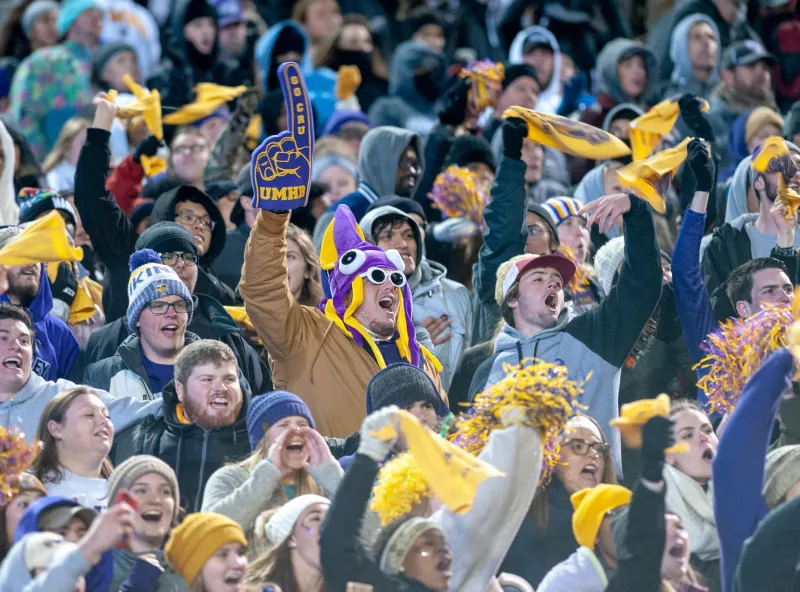
There's a moment every visiting quarterback dreads. The offense lines up, the crowd senses a third-and-short, and suddenly 70,000 people are doing one collective job — making it impossible for anyone in a different-colored jersey to hear a single word. That's not enthusiasm. That's a coordinated disruption machine, and some franchises have turned it into one of the most underrated competitive advantages in American sports.
We track live plays, real-time stats, and broadcast data here at FirstKick Live, and one thing keeps showing up in the noise — literally. The teams winning at home aren't just winning because of talent or matchups. A significant chunk of those home victories trace back to something you can measure in decibels.
What the Data Actually Says
Researchers and sports analytics teams have been quietly building a case for years. Studies examining NFL game logs consistently show that visiting offenses commit false start penalties at a rate roughly two to three times higher than home offenses. That's not a coincidence. It's physics.
When ambient noise crosses roughly 90 decibels — a threshold easily shattered at venues like Arrowhead Stadium in Kansas City, CenturyLink (now Lumen Field) in Seattle, or Sanford Stadium in Athens, Georgia — the human ear starts struggling to isolate specific sounds. An offensive lineman waiting to fire off the snap count is now competing against a wall of sound that physically interferes with his ability to process the quarterback's cadence. The brain compensates by guessing. Sometimes it guesses wrong, and a flag flies.
Arrowhead has been documented hitting 142 decibels during peak moments, which puts it in the range of a jet engine at close range. That's not a crowd. That's a sonic weapon.
The False Start Factory
Let's talk about what a single false start actually costs in a real game. Five yards doesn't sound catastrophic, but move the chains back on second-and-3 and now you're looking at second-and-8. That's a completely different play call. The defense rotates to a different coverage shell. The offense burns a more complex route combination. The tempo gets disrupted. And the quarterback — already operating in a noise tunnel — now has to process a reset while the crowd feeds off the flag.
College football amplifies this even further. The SEC's loudest venues, places like Death Valley in Baton Rouge or Neyland Stadium in Knoxville, have been deliberately engineered — through stadium geometry, seating angles, and even turf surface choices — to trap and amplify crowd sound. These aren't accidents of architecture. Athletic programs have consulted with acoustic engineers to maximize how noise bounces and concentrates toward the field.
Some offensive coordinators have started treating road games at these venues as a separate game-planning category entirely. Silent counts, hand signals, and pre-snap communication shifts aren't just backup options anymore — they're the primary plan.
The Snap Count Becomes a Liability
Here's where it gets tactically interesting. When a visiting offense switches to a silent count — essentially using a leg lift or hand signal from the center to trigger the snap — they're already operating at a disadvantage. The timing between the quarterback's motion and the offensive line's movement is slightly less synchronized than a verbal count allows. Defensive ends, trained to read those visual cues, can time their pass rush jump slightly better. It's a fraction of a second, but at the NFL level, that's the difference between a clean pocket and a sack.
The home defense doesn't have to do anything special. The crowd already forced the offense to compromise its own communication system. The noise did the coaching.
From a betting perspective — and this matters if you're making decisions on FirstKick Live during a live game — visiting team offensive line performance metrics in loud road environments consistently underperform projections. False start rates, sack rates, and third-down conversion percentages all dip in a statistically meaningful way. Sharp bettors have been factoring stadium noise into their models for years. The casual market is just now catching up.
Which Teams Have Actually Mastered This
The Kansas City Chiefs are the gold standard. Chiefs fans have developed a genuine culture around coordinated noise — knowing when to be loud, when to let the offense operate, and when to absolutely bury a visiting offense in sound. That's not organic. That's a fanbase that has been educated and encouraged by the organization itself. The results show up in their home record year after year.
Seattle's 12th Man tradition is similar. The Seahawks have historically been one of the league's worst road teams relative to their home performance — a gap that directly reflects how much their home environment inflates results. When that crowd is locked in, the visiting offense is essentially playing a different, harder game.
In college football, LSU's night games in Tiger Stadium are practically legendary for this. Visiting teams have reported that their quarterbacks couldn't hear anything beyond three feet. Coaches have gone to full silent-count packages in the first quarter just to survive the opening drives.
The Real-Time Ripple Effect
What makes crowd noise uniquely powerful in the modern game is that its impact compounds. One false start rattles an offensive lineman's confidence. A broken play forces a punt. The crowd gets louder. The next possession starts with the visiting offense already in a reactive headspace. By the second quarter, you're not just watching a loud stadium — you're watching a psychological feedback loop that the home team didn't have to do anything to create.
Broadcasters rarely frame it this way. The camera cuts to a screaming fan, the announcer says something about home field advantage, and the moment passes. But if you're watching a live game and you see a visiting offense struggling with pre-snap penalties, remember: that's not sloppiness. That's a stadium doing its job.
The teams that figure out how to neutralize it — through meticulous silent-count rehearsal, pre-snap communication drills in artificially loud practice environments, and quarterback mental conditioning — are the ones who become genuine road threats. Everyone else is just hoping to survive the noise until halftime.
Next time you're watching a road game at Arrowhead or Tiger Stadium on our live feed, pull up the false start tracker. The crowd's doing more work than you think.