You Knew Before the Crowd Did: The Weird Science Behind Referee Calls Arriving Out of Order
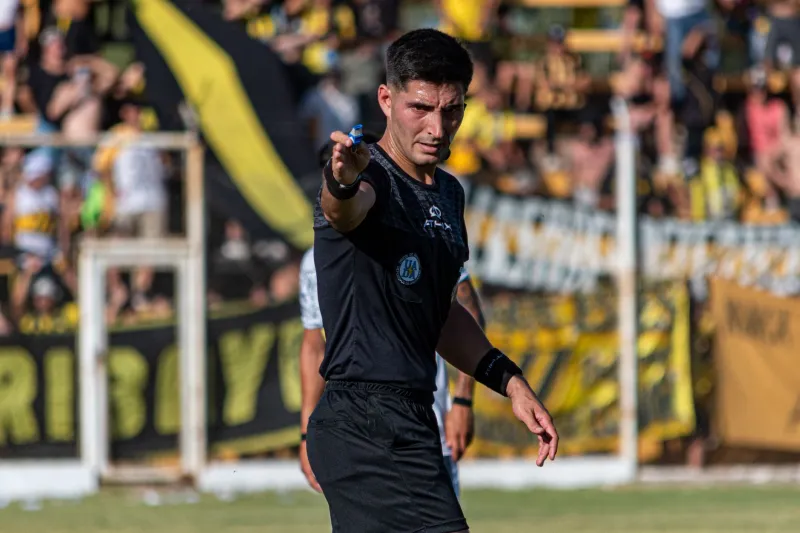
Picture this. You're watching a tight MLS match on a Saturday afternoon, cold drink in hand, and the center referee suddenly throws up his arm for a foul. You see it. You process it. You maybe even groan or pump your fist. Then, a full beat later, the stadium crowd erupts — because they just figured out what happened.
It feels backwards. They're there. You're on your couch. How are you ahead of them?
Welcome to one of the stranger quirks of modern live sports broadcasting — a phenomenon that's been quietly happening on your screen for years, and one that has real implications for how we experience games, how bettors operate, and how leagues think about information flow.
Sound Travels Slow. Light Travels Fast. Physics Is Trolling Stadium Fans.
Here's the basic science, and it's almost embarrassingly simple once you hear it.
Sound moves through air at roughly 1,125 feet per second. That's fast enough in everyday life, but inside a stadium that's 300, 400, or even 700 feet wide, it starts to matter. A fan sitting in the upper deck of a venue like Lumen Field or Gillette Stadium might be 200 to 300 feet from where a whistle is blown at midfield. That gap translates to a delay of roughly a quarter to a third of a second before the sound physically reaches their ears.
Meanwhile, the broadcast camera capturing that same whistle is sending a visual signal through a fiber optic pipeline that moves at a significant fraction of the speed of light. The production truck processes it, a satellite or internet backbone carries it, and it lands on your screen — often with a delay, yes, but one that's uniform and calibrated. What you're seeing is the referee's body language and signal, which travels visually to the camera essentially instantaneously compared to sound crossing a football pitch.
So before the crowd in the stadium has even heard the whistle, you've already seen the ref's arm go up on your TV. That's not a glitch. That's physics.
The Visual-Audio Disconnect You've Been Noticing Without Realizing It
Broadcasters know about this. Audio engineers spend serious time syncing ambient crowd noise with the picture to make the viewing experience feel cohesive. But here's where it gets interesting: the crowd noise you're hearing on a broadcast isn't always perfectly synced to what the crowd is actually reacting to in real time.
Stadium microphones capture ambient sound from across the venue. That audio gets mixed, compressed, and occasionally buffered before it hits your speakers. When a crowd reacts to a whistle, that reaction travels acoustically through the stadium, gets picked up by mics at various distances, and then goes through its own processing chain. The result is a layered, slightly smeared audio experience that can run anywhere from a few frames to nearly a full second behind the visual.
What this means practically: you, sitting at home, often see a referee make a call, watch the players react, and then hear the crowd noise swell — all while the people physically inside that stadium are still waiting for the sound wave to reach their section. You're not imagining it. The timing genuinely is off, and it consistently favors the viewer at home.
What This Means If You're Betting Live
If you're active on any of the major US sportsbooks — DraftKings, FanDuel, BetMGM — you already know that in-play betting has exploded. Live wagering now accounts for a massive chunk of handle on soccer and football, and the margins are razor thin.
Here's where this gets spicy. If a home viewer consistently perceives referee decisions a fraction of a second before the stadium crowd processes them, that viewer — in theory — also perceives them before certain automated betting systems that rely on stadium-side data feeds. Some sportsbooks use broadcast signals to trigger odds adjustments. Others use direct data partnerships with leagues. The latency chain is different for each, and it's not always obvious which is faster.
Sports betting integrity researchers have flagged this kind of temporal arbitrage for years. The concern isn't really that your average fan is going to exploit a 300-millisecond window on a penalty kick call. The concern is that sophisticated actors with the right setup could, and some probably do.
Leagues are aware. The NFL, MLS, and various soccer governing bodies have invested heavily in direct data pipelines to official sportsbook partners — feeds that bypass the broadcast chain entirely and push officiating data as close to real-time as technically possible. Whether those feeds are actually faster than what lands on your TV depends on the specific infrastructure, and nobody's publishing a full comparison chart anytime soon.
Do Leagues Actually Think About This?
Short answer: yes, more than they let on.
The conversation around real-time data distribution has gotten serious at the league level, particularly as legal sports betting has expanded across more than 30 US states. When you have a multi-billion dollar wagering ecosystem tied to your product, the timing of information isn't just a broadcast quality issue — it's a financial and legal one.
MLS, for its part, has been building out its data infrastructure significantly as the league grows. The league's partnership with Sportradar gives it a direct pipeline to betting operators that's designed to be authoritative and fast. But the broadcast experience — what you're watching on Apple TV+ or a local RSN — runs on a different timeline.
The NFL is even more deliberate. The league's official data partnerships are structured specifically to ensure that licensed operators get information through controlled channels, not by screen-scraping a broadcast. But that doesn't mean the average viewer watching on a Sunday afternoon isn't still, in some small but real way, temporally ahead of the 70,000 people freezing in the upper deck.
The Couch Is Actually a Pretty Good Seat
There's something almost poetic about this. We spend a lot of time romanticizing the in-stadium experience — the atmosphere, the noise, the energy. And look, none of that is wrong. Being there for a playoff atmosphere or a rivalry match is genuinely something a broadcast can't fully replicate.
But in terms of raw informational advantage? The living room is quietly winning. Multiple camera angles. Instant replay. Commentary explaining what just happened. And now, apparently, a slight but consistent temporal edge on referee decisions over the people who paid $200 for their seat.
At FirstKick Live, we think about the live viewing experience a lot — what it means to be watching in real time, what you gain from being locked in during a match, and what the broadcast is actually delivering versus what it seems to deliver. This particular quirk is a good reminder that "live" is always a relative term, and the gap between what's happening and what you're experiencing is never quite zero.
Next time you see a ref blow a call and find yourself reacting before the crowd does, don't second-guess yourself. You're not psychic. You're just downstream of a very interesting set of physics.
And honestly? That's a pretty fun place to be.