Smoke and Mirrors in the Final Frame: How Broadcast Crews Pull the Curtain When Games Get Real
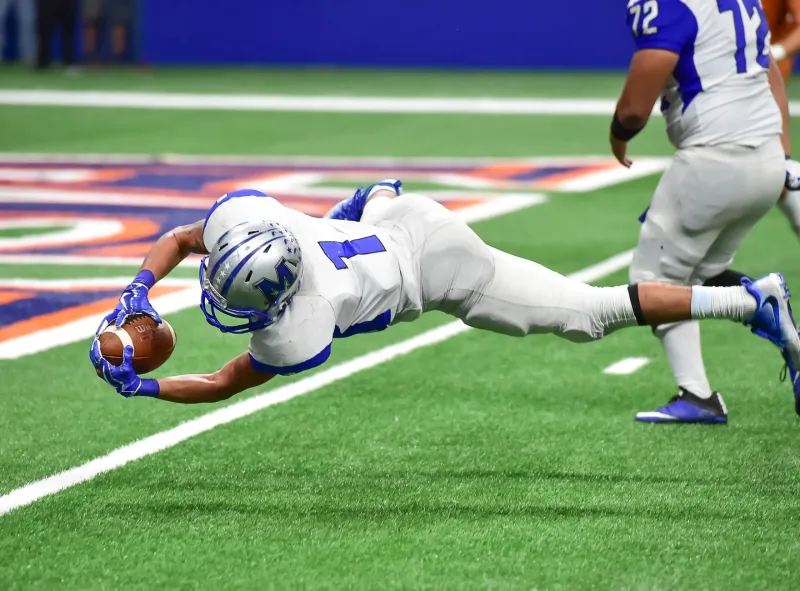
Here's a scenario every serious sports fan has lived through. Fourth quarter, two-minute warning, game tied or within a field goal. A receiver goes down after a hit, a goalkeeper makes a save that may or may not have crossed the line, or a runner gets stuffed at the goal line in a way that looks — from the standard broadcast angle — completely inconclusive. You wait for the replay. You wait a little longer. And then the network cuts to a wide shot of the stadium, a shot of the coaching staff looking concerned, and then back to the huddle.
No replay. No alternate angle. Nothing.
This isn't a glitch. It's a pattern. And once you start noticing it, you genuinely cannot stop.
The Production Machine Has a Peak Hours Problem
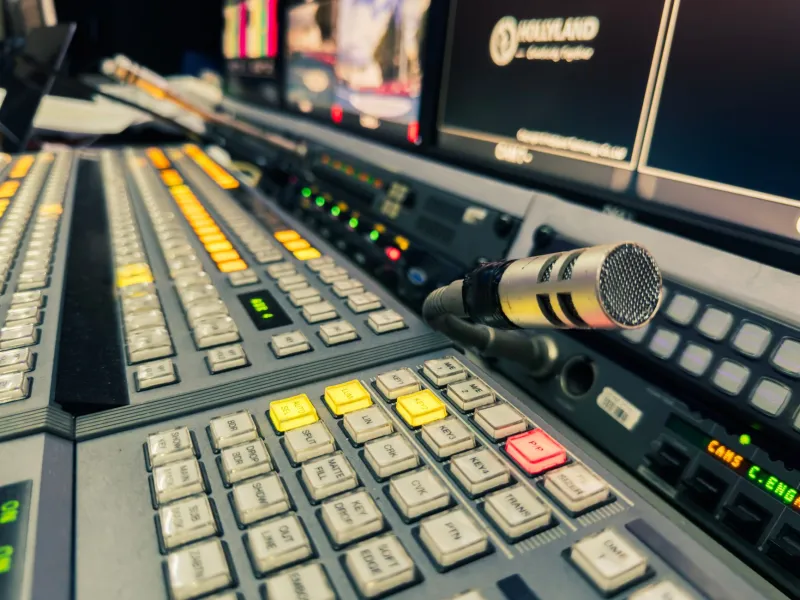
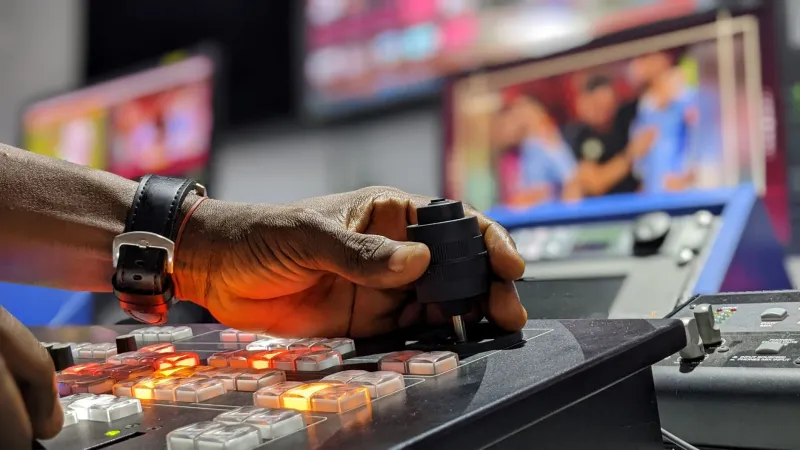
Broadcast trucks are complicated beasts. A major NFL or Premier League game on a top US network involves somewhere between 12 and 30 cameras depending on the deal, the venue, and how much the network actually cares about that particular matchup. Producers, directors, and technical coordinators are managing an enormous amount of incoming footage simultaneously.
The thing is, those resources aren't distributed evenly across a broadcast. Early in games, when the story is still being written and producers are trying to establish narrative hooks, there's a tendency to throw everything at the screen. Slow-mo replays from the pylon camera, overhead drone shots, sideline angles that show receiver routes developing in real time. It's visually rich and genuinely impressive.
But as the game progresses — particularly into the third and fourth quarters — production energy shifts. Crews get tired. Directors start managing toward the post-game show. Decisions about which cameras to keep hot and which to pull back on get made fast, under pressure, and often with one eye already on the clock.
The result? The moments that matter most are frequently the ones captured least effectively.
Follow the Money, Then Follow the Tape
There's a financial layer to this that's worth sitting with for a second. Networks pay enormous rights fees for marquee sporting events — the NFL's current broadcast deals are worth billions annually across multiple partners. That money goes into production, sure, but it also goes into pre-game shows, celebrity analysts, augmented reality graphics packages, and a dozen other things that have nothing to do with actually covering the game itself.
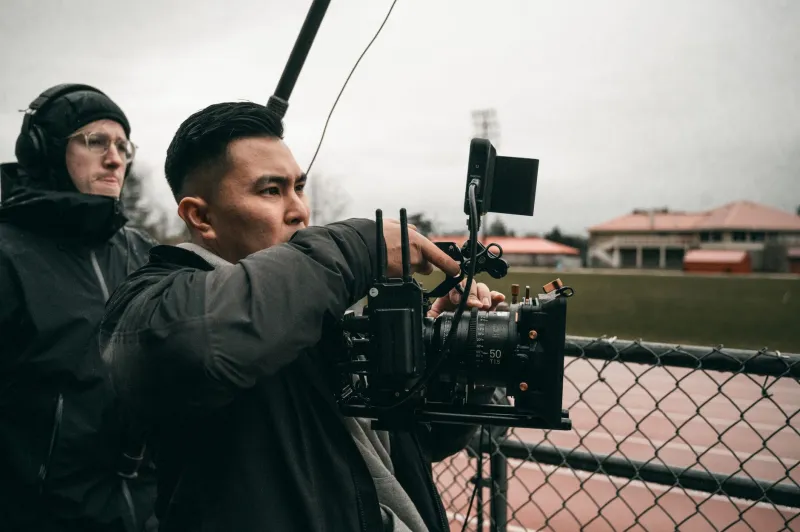
When budgets get stretched, something has to give. And according to people who've worked inside broadcast production — some of whom have spoken publicly about the industry's resource allocation problems — what often gives is the deep camera infrastructure in the final stages of games. Certain specialty rigs, particularly the ones positioned for unusual or low angles, require dedicated operators. Those operators cost money per hour. Keeping them engaged for the full four-hour window of an NFL broadcast is expensive.
So sometimes, they're quietly stood down before the game ends.
Nobody announces this. Nobody puts it in the broadcast notes. But the evidence shows up on your screen, in the form of that same center-field wide shot that tells you absolutely nothing about whether the ball crossed the plane.
What This Means If You're Betting the Fourth Quarter
For the growing number of Americans who engage in live in-game wagering — and that number is substantial, with the US sports betting market now worth tens of billions annually — broadcast quality in the final frame isn't just an aesthetic complaint. It has real financial stakes.
Live betting odds shift in real time based on what's happening on the field. But bettors watching from home are dependent on the broadcast feed to make those judgments. If the network isn't showing you the angle that confirms whether a catch was made in bounds, or whether a foul occurred inside the penalty area, you're making decisions with incomplete information.
Sportsbooks, interestingly, are often pulling from multiple data sources simultaneously — including officiating feeds, player tracking data, and in some cases proprietary camera setups. The average bettor watching a standard cable or streaming broadcast doesn't have any of that. They have whatever the director chose to show them.
That asymmetry is worth thinking about the next time you're deciding whether to throw money on a fourth-quarter prop.
Streaming Platforms Are Starting to Change the Calculus
Here's where things get genuinely interesting, and where platforms built around real-time sports coverage have an opportunity to do something different. The traditional broadcast model is linear — one director, one feed, one set of choices pushed to every viewer simultaneously. That model made sense when everyone was watching the same channel on the same television.
It makes considerably less sense in 2025, when the infrastructure exists to offer multiple concurrent streams of the same game, each from a different angle, with the viewer in control of what they're watching.
Some streaming services have begun experimenting with this. Amazon's Thursday Night Football coverage has offered alternate viewing modes. Apple TV's MLS package has played around with tactical camera views. These aren't perfect products yet, but they represent a fundamentally different philosophy — one where the viewer isn't passive and the production team isn't the sole gatekeeper of what gets seen.
If you're watching a tight game in the final minutes and you want the end zone camera instead of the broadcast director's preferred wide angle, that should be an option. The technology exists. The question is whether the rights holders and distributors have any real incentive to offer it.
Incompetence, Cost-Cutting, or Something Worse?
Let's be honest about what we're actually alleging here, because it's worth being precise. There's no credible evidence that networks are deliberately hiding replays to protect specific outcomes. Sports broadcast conspiracy theories tend to collapse under the weight of how chaotic and human the production process actually is.
What there is evidence of is a systemic misalignment of priorities. Networks invest heavily in the spectacle of sports — the opening montages, the halftime analysis, the celebrity sideline reporters — and comparatively less in the granular, technical coverage of the moments that actually determine outcomes. That's a choice, even if it's not a sinister one.
It's also a choice that viewers, bettors, and fans are increasingly aware of and increasingly fed up with. The demand for better, more transparent live coverage is real. The platforms willing to actually deliver it are still finding their footing.
Until they do, keep an eye on that fourth quarter. And notice what the camera isn't showing you.