Refs Got It Wrong and You Knew First: The Replay Revolution That's Breaking the Game It Was Supposed to Fix
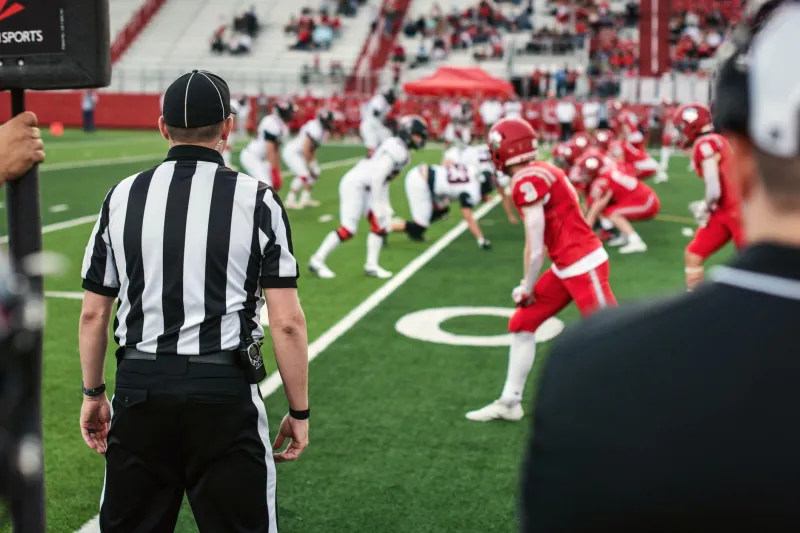
There's a moment every football fan recognizes. The receiver goes down in the end zone, the officials signal touchdown, the crowd erupts — and then your phone buzzes. Someone in your group chat has already pulled up three different angles proving the ball never actually crossed the plane. You saw it. Your buddy in Denver saw it. The guy tweeting from a sports bar in Tampa Bay saw it. The one group that apparently didn't see it? The officials standing ten feet away with access to an entire replay command center.
Welcome to the paradox nobody in the league office wants to talk about out loud.
The Technology That Was Supposed to Save Us
Instant replay entered the NFL conversation as a hero. The promise was simple: give officials a second look, eliminate the catastrophic blown calls, and restore faith in the integrity of the game. When the league reintroduced replay review in 1999 after a decade-long hiatus, it felt like a reasonable bargain. A few extra minutes per game in exchange for getting the big moments right.
That bargain has slowly curdled into something nobody agreed to.
The average NFL game already runs over three hours. Reviews add anywhere from two to six minutes per stoppage when a coach throws the red flag or the booth initiates its own review. Across a full season, that's a staggering amount of dead time — time when no football is being played, no momentum exists, and viewers are left staring at the same sideline reporter doing her best to fill silence. According to tracking data from multiple broadcast analysts, actual live play in an NFL game accounts for roughly eleven minutes of a three-plus hour broadcast window. Replay reviews are eating into that sliver of real action without consistently delivering the accuracy they promised.
Soccer has its own version of this headache. VAR — the Video Assistant Referee system — was adopted by FIFA and rolled out across major leagues worldwide with similarly noble intentions. It has since become one of the most controversial officiating tools in the sport's history. Goals get waved off after two-minute deliberations over millimeter-offside calls that require technology accurate to fractions of an inch. The crowd doesn't celebrate anymore. They wait. They hold their breath. They check their phones.
The Couch Knows Before the Booth Does
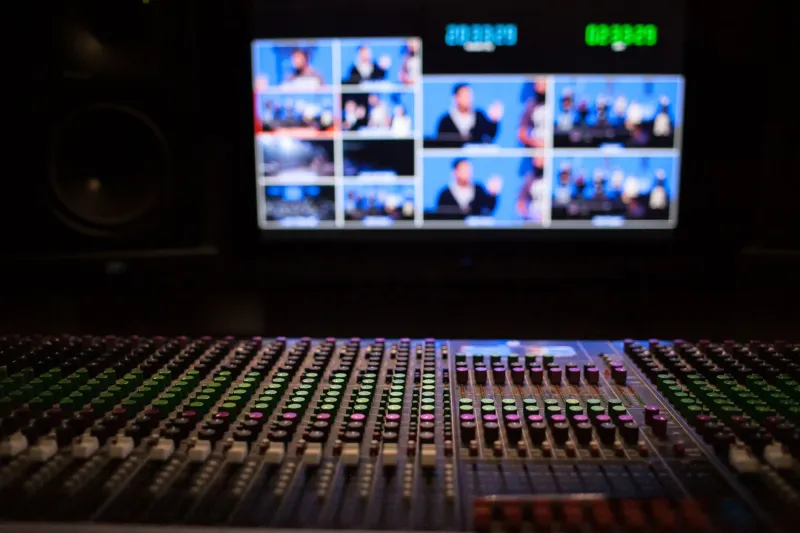
Here's where the whole system gets genuinely strange. Broadcast technology has outpaced officiating infrastructure in a way that creates an almost absurd information gap. Networks like ESPN, Fox, and CBS have invested heavily in ultra-slow-motion cameras, sky cams, pylon cams, and end zone angles that produce footage of extraordinary clarity. That footage is available to broadcasters — and therefore to viewers at home — almost immediately after a play ends.
The replay booth, by contrast, is working through a more bureaucratic pipeline. Officials must formally initiate the review process, communicate through headsets, navigate league protocols, and then physically watch footage on monitors that may not always have the same angle quality that's already airing on national television. By the time the referee walks back to the field to announce a decision, millions of fans have already reached a verdict — and in a significant number of cases, that verdict contradicts what the officials ultimately rule.
This isn't a fringe phenomenon. Sports analytics firms have tracked high-profile review decisions and found a consistent pattern: viewers watching real-time broadcasts frequently identify the correct call faster than the official review process confirms it. The technology advantage has flipped. The fans are ahead of the system designed to correct the fans' confusion.
What Real-Time Actually Means
This is exactly the kind of environment where how you consume sports starts to matter as much as what you're watching. At FirstKick Live, the whole operation is built around one core belief — the moment is the thing, and you shouldn't have to wait for a network to decide when you get to see it.
When a controversial play happens, the angles that clarify it need to be surfaced immediately, not queued up behind a commercial break or buried under a color commentator explaining what you just watched with your own eyes. Real-time coverage means real-time context. The pylon cam, the overhead look, the slow-motion replay that actually answers the question — those need to be in front of you while the debate is still live, not after the officials have already made a decision that may or may not reflect what the footage shows.
That's the gap the current broadcast model keeps failing to close. Viewers are handed incredible technology and then asked to wait patiently while a slower institutional process catches up. It creates frustration, erodes trust, and makes the games feel longer without making them feel fairer.
The Deeper Problem Nobody Wants to Admit
Strip away the technical arguments and something more uncomfortable emerges: replay hasn't eliminated human error. It's just relocated it and slowed it down.
Officials reviewing footage are still humans making judgment calls under pressure. The standards for overturning a call — "indisputable visual evidence" in the NFL, for example — are themselves subjective thresholds. Two officials watching the same angle can reach opposite conclusions about whether that bar has been cleared. Replay adds a layer of process without adding a layer of certainty, and the process costs everyone time while delivering the illusion of scientific precision.
The result is a sports culture in a strange state of suspension. Fans have become amateur forensic analysts, freeze-framing footage on their phones while officials deliberate. Betting lines shift in real time based on what sharp money thinks the review will conclude. And the games themselves develop a stop-and-start rhythm that drains energy from stadiums and television audiences alike.
Speed Is Accuracy When the Moment Is Now
The irony at the center of all this is that slowing the game down to get things right has made getting things right feel less satisfying. When a review takes four minutes and concludes with the original call standing, nobody feels vindicated. They feel cheated out of four minutes and still suspicious of the outcome.
Faster access to better angles — delivered at the moment of the play rather than filtered through a review process — would serve fans better than the current model in almost every practical sense. You'd know sooner. The information would be clearer. The conversation would happen in real time rather than in a frustrated aftermath.
That's the standard FirstKick Live is chasing on every play. Not the replay that arrives after the argument is over, but the angle that settles the argument while it's still happening. Because in live sports, being right ten minutes later doesn't feel like being right at all.