Burning Timeouts on Ghosts: The Psychology Behind Coaches Challenging Plays That Were Never Going to Flip
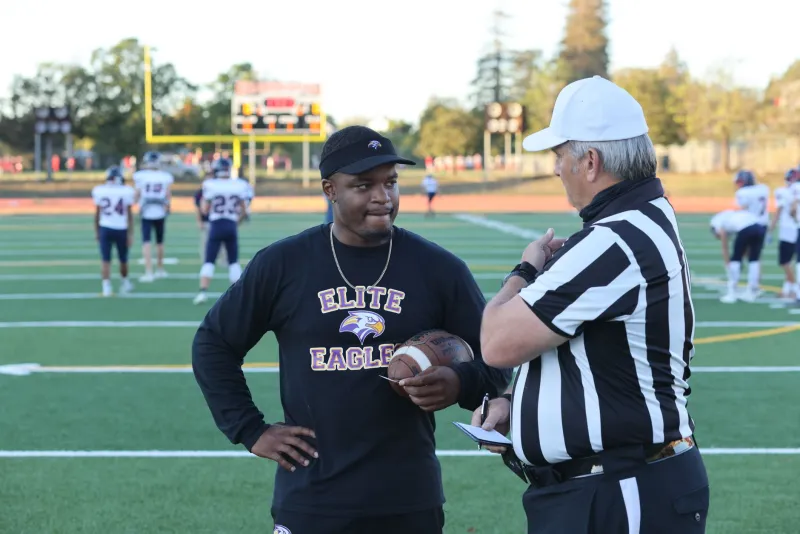
There's a moment every football fan recognizes. The play ends, the crowd reacts, and before anyone's even processed what happened, a red flag is already spinning through the air. The coach has thrown it. The challenge is live. And somewhere in the booth, a producer is queuing up an angle that's about to make that coach look like he challenged a shadow.
It happens multiple times every single Sunday. And yet the challenge system — designed to be a precision instrument — keeps getting used like a panic button.
The Gap Between Gut and Evidence
Here's the thing about live football: what a coach thinks he saw and what the cameras actually captured are two entirely different conversations. Coaches are working off a sideline view that's partial at best, obscured by bodies, and filtered through the adrenaline of a game that's moving at full speed. What they're reacting to isn't replay evidence. It's an emotional impression.
Research in sports cognition has consistently shown that confidence in a visual judgment spikes hardest right after the moment of uncertainty — not after someone's actually verified anything. In plain terms, coaches feel most sure about what they saw in the three seconds immediately following a contested play. That's the exact window when most challenges get called.
The problem is that three-second window is built almost entirely on instinct, sideline chatter, and whatever the offensive or defensive coordinator is screaming into the headset. None of that is replay evidence. None of that is what the officiating booth is going to be looking at.
What the Numbers Are Quietly Saying
Challenge success rates across the NFL have hovered in a range that should make every offensive coordinator nervous. Roughly a third of coach's challenges result in an overturned call — and that number has remained stubbornly flat even as broadcast technology has gotten sharper and replay angles have multiplied. More cameras haven't made coaches better at knowing when to challenge. If anything, the additional angles have created an illusion of certainty that doesn't always survive contact with the actual review.
For bettors watching on platforms like FirstKick Live, this stuff matters more than it might seem. A failed challenge in the second quarter doesn't just burn a timeout — it reshapes the entire late-game clock management picture. Teams that lose their challenges early are statistically more likely to be unable to stop the clock in the final two minutes when they actually need to. That's a live betting variable that's hiding in plain sight, and sharp bettors have been quietly pricing it in for years.
The Illusion of Control Problem
Psychologists have a name for what happens when someone performs an action to feel like they're doing something in a situation where the outcome is largely out of their hands. It's called the illusion of control, and it shows up everywhere from casino floors to trading desks to NFL sidelines.
When a coach throws the challenge flag, he's not just initiating a review. He's asserting agency. He's telling his players, his staff, and sixty thousand people in the stadium that he's on it, that he caught something, that the other team isn't going to get away with whatever just happened. The act of challenging is itself a communication, and that communication pressure is completely separate from whether the challenge has any actual merit.
This is where the system gets quietly broken. Because the flag has social and emotional value independent of its tactical value, coaches are incentivized to throw it in situations where the evidence doesn't support it. And once that flag is out of their hand, the timeout is already spent whether the call gets reversed or not.
Broadcast Angles Are a Trap
Here's something that doesn't get talked about enough: the angles that coaches are seeing on their sideline tablets aren't the same angles that officiating reviewers are working with, and they're definitely not the angles that the national broadcast is showing the viewing audience.
Producers select replay angles for drama and clarity. They're going to show you the angle that makes the play look most interesting, most contested, or most visually clean. That's not the same as the angle that actually resolves the question of whether a receiver had both feet in bounds or whether a runner's knee was down before the fumble.
Coaches watching a tablet replay on the sideline are essentially watching a curated highlight. The angles that would definitively answer the question — the ones shot from the pylon camera, the end zone camera, or the overhead — often don't make it to the sideline feed in time for a decision that has to happen in under two minutes. So the coach is making a high-stakes call based on incomplete visual information while under time pressure and emotional load. That's a setup for bad decisions.
The Teams Getting It Right
A small cluster of franchises have started treating challenge decisions the way sharp bettors treat line movement — as an information problem, not an instinct problem. They've built challenge protocols that require a specific person in the press box to green-light any challenge before the flag goes down. That person's only job during a contested play is to immediately pull the best available angle and make a fast binary call: is there clear evidence to overturn, or isn't there?
The key word is clear. Not possible. Not maybe. Clear. Because the officiating standard for overturning a call on review requires indisputable visual evidence, and anything short of that is just burning a timeout for the feeling of having done something.
Teams running this kind of system challenge less often and win at a significantly higher rate when they do challenge. The tradeoff is that it requires a coach to trust a voice in his earpiece over his own eyes in a moment when every instinct is screaming to throw the flag.
What It Looks Like From Where You're Watching
Next time you're watching a game live and a coach throws a challenge that feels like a stretch, pay attention to what happens in the next ten minutes. If that challenge fails, track the timeout situation heading into the fourth quarter. You'll start noticing how often a failed early challenge turns into a clock management disaster down the stretch — a two-minute drill that can't be stopped, a field goal attempt that can't be set up because there's no timeout left to spike the ball.
The phantom timeout isn't just a wasted challenge. It's a ripple that runs through the rest of the game in ways that don't always show up in the box score but absolutely show up in the outcome.
The red flag looks decisive. Sometimes it's just expensive theater.