The Chain Gang Lottery: How a Few Inches of Eyeball Judgment Are Quietly Flipping Football Games
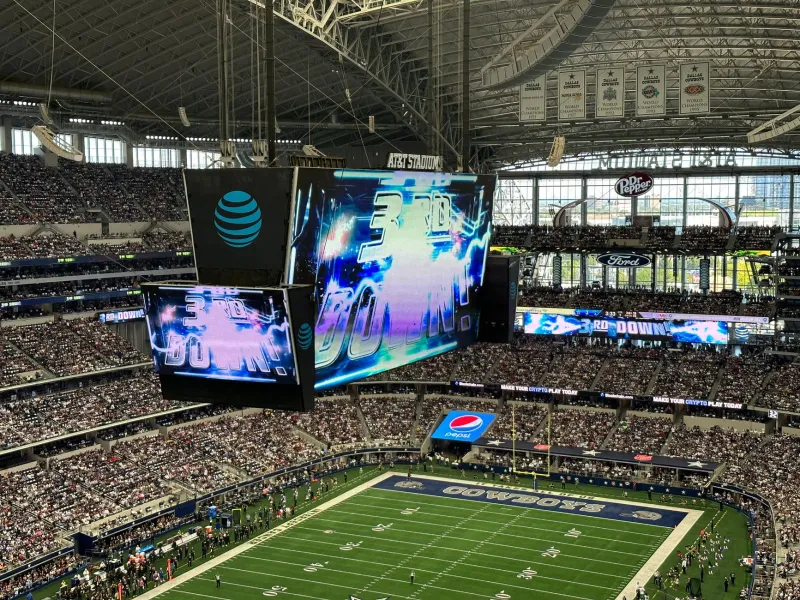
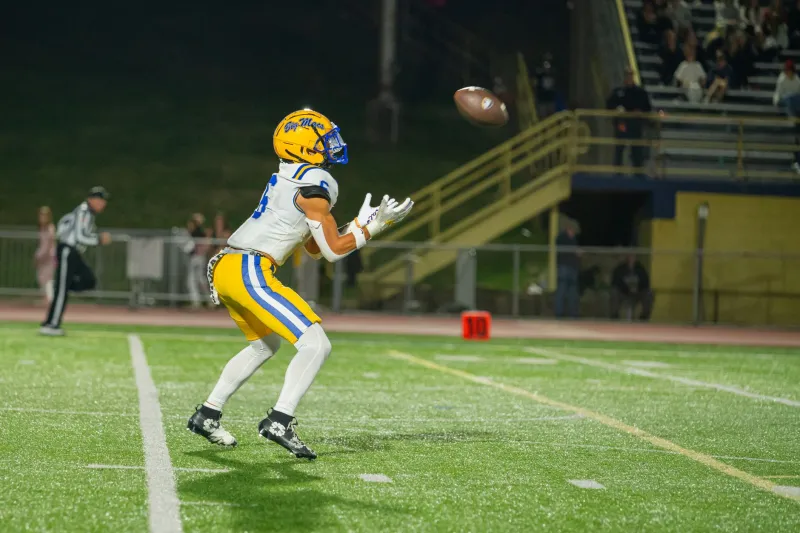
There's a moment that happens dozens of times every Sunday that almost nobody talks about. The offense converts a third-and-short, the ref spots the ball, and a guy on the sideline jogs out with a metal pole and plants it in the turf. That's it. That's the whole process. No sensor. No laser. No algorithm. Just a dude making a judgment call about where to stick a stick.
Everything that follows — the entire measurement drama, the referee crawling under a pile of bodies with a chain, the crowd holding its breath — is downstream of that one quiet, unreviewable moment. And if you think it doesn't matter, you haven't been watching closely enough.
The Invisible Decision That Sets Everything Else in Motion
Here's the part that should make your head spin a little. When officials measure for a first down, the standard they're measuring against was set by a human being eyeballing a yard marker. The chain crew's front stake gets placed at the spot of the ball when a new series begins. That placement is the anchor. Everything else is calculated relative to it.
Which means if the initial spot is off by even half a yard — and given that we're talking about a person planting a pole into grass or turf while tracking a moving play — the entire measurement is off by that same margin. A team that needs to gain exactly ten yards to keep their drive alive is actually being measured against wherever that stake happened to land, not some Platonic ideal of a perfect first down marker.
Replay officials can review whether a player's knee was down. They can look at whether a receiver had his feet in bounds. What they cannot review is whether the chain crew placed the front stake in exactly the right spot to begin with. That decision is baked in before anyone picks up a flag.
Physics, Turf, and the Margin Nobody Measures
The physics here are worth thinking about. A standard football is roughly eleven inches long at its widest point. A half-yard is eighteen inches. These are not large numbers, and the margin between a first down and a turnover on downs can absolutely live inside that range.
Turf adds another wrinkle. On natural grass fields, the yard line markings are painted onto an uneven surface. The pole doesn't always sit flush. On artificial turf, the lines are more precise, but the pole still has to be planted by a human hand at an angle that can introduce its own small error. Multiply this across a full game, across a season, across different stadiums with different chain crews who have trained to varying degrees, and you start to see a system that has a lot more variance than the official rulebook implies.
Different leagues handle this differently, too. College football crews, NFL crews, and high school officiating bodies all have their own training protocols for chain crew placement. There's no universal certification that governs exactly how a marker is set. Some crews are meticulous. Some are working off decades of muscle memory. The gap between them is real, even if it's rarely discussed.
Teams Are Quietly Doing the Math
Here's where it gets genuinely interesting from a strategy standpoint. A small but growing number of coaching staffs and analytics departments have started looking at chain crew tendencies the same way they look at referee tendencies on pass interference or holding calls. The question they're asking is simple: does this crew's placement style trend toward giving the offense more or less margin on measurements?
It sounds like a paranoid rabbit hole, but the data infrastructure to answer that question actually exists. Every snap is logged with GPS and optical tracking data in most professional environments. Cross-referencing those logs with measurement outcomes over a large enough sample size can reveal patterns that are almost certainly noise — or might not be.
Where this gets directly relevant for bettors is in how drive efficiency metrics interact with field position. If a team is playing in a stadium where the chain crew has historically set up in ways that make short-yardage conversions slightly harder to confirm, that's a real variable. It's not the kind of thing that shows up in a standard game preview, but it's the kind of edge that sharp bettors and advanced analytics shops are increasingly interested in.
The Replay Illusion
There's a reason replay review feels so definitive even when the underlying system has these soft spots. The measurement itself — the physical act of stretching the chain across the field — looks authoritative. It's a ritual. The crowd goes quiet, the announcers lower their voices, and a few officials bend down to compare metal to leather with the gravity of a scientific experiment.
But the chain is only as accurate as the placement that set it. If you've ever watched a measurement come down to a fraction of an inch, you've witnessed a system presenting false precision. The answer might be technically correct relative to where the pole was placed. Whether the pole was placed correctly is a question that nobody in that stadium is equipped to answer in real time.
This isn't a knock on chain crews. These are volunteers and part-time officials doing a genuinely difficult job under pressure, often in loud stadiums with limited sight lines. The issue isn't the people. It's the process, and specifically the gap between how precise the process looks and how precise it actually is.
What a Real Fix Would Look Like
The technology to solve this problem essentially already exists. Electronic first down systems, using the same GPS and optical tracking infrastructure that leagues already deploy for player performance data, could anchor the chain measurement to a verified spot rather than a human placement. Several experimental systems have been tested at various levels of play over the past decade.
The holdup is partly cost, partly the sheer logistical complexity of retrofitting a system that works across hundreds of venues, and partly — let's be honest — institutional inertia. The chain gang is a piece of football's visual identity. Replacing it with a sensor readout doesn't have the same drama.
But as the margins of professional football keep shrinking, as analytics departments keep finding edges in places nobody thought to look, and as the betting market keeps getting more sophisticated about the variables that move game outcomes, the pressure to get this right is going to build. A half-yard here and a half-yard there adds up across a season. For teams operating at the edge of playoff contention, it might already be adding up to wins and losses.
Next time you're watching a measurement live on FirstKick, look at the pole before you look at the chain. That's where the real decision already happened.