Ghost Formation: The Art of Building a Play Out of Thin Air Before the Ball Even Moves
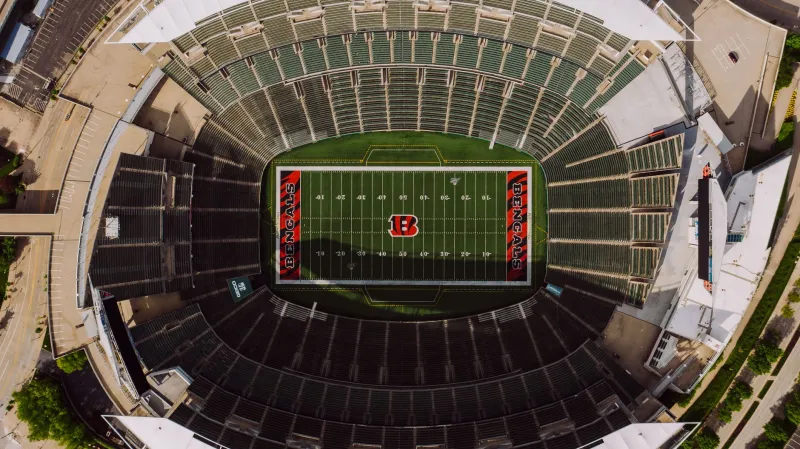
Watch a Chiefs offensive possession on mute sometime. No commentary, no graphics, just the raw broadcast feed. You'll notice something strange happening in those final five to seven seconds before the snap. Bodies are drifting. Alignments are shifting. A receiver who lined up on the left hash is suddenly in the backfield. A tight end who looked like he was blocking is now split wide. By the time Patrick Mahomes touches the ball, the formation the defense prepared for no longer exists.
That's not an accident. That's the whole point.
Pre-snap motion has always been part of football, but what's happening at the elite level right now is something categorically different. Teams aren't just moving players to create better angles or stress a coverage. They're using coordinated, multi-player movement sequences to literally construct plays that weren't drawn up in that exact form — plays that only become real at the moment of the snap, depending on what the defense reveals.
The Defense Has to Answer Before the Question Is Fully Asked
Here's the core mechanic that makes this so brutal for opposing coordinators. When an offense sends a player in motion across the formation, the defense is forced to respond. Does a linebacker follow him? Does a safety rotate? Does the cornerback on the far side squeeze toward the middle or hold his ground?
Every adjustment the defense makes is information. And elite quarterbacks — Mahomes, Brock Purdy, Lamar Jackson — are reading those responses in real time, updating their mental picture of the play with each step a defender takes.
The offense isn't just moving players for positioning. They're running a live diagnostic on the defensive structure, and the play call that comes out of the snap is partially determined by what that diagnostic reveals. It's less like executing a script and more like improvising within a set of pre-agreed rules.
Kyle Shanahan's 49ers have built an entire offensive identity around this concept. Their motion-heavy, pre-snap-shifting system creates what analysts sometimes call "conflict reads" — situations where a defender is genuinely responsible for two different threats and can only resolve the conflict by committing to one. By the time he commits, the ball is already gone to wherever he abandoned.
What Casual Viewers Are Actually Watching Without Knowing It
Here's the thing about watching this on a standard broadcast: you're almost certainly missing most of it. The camera is usually locked on the quarterback or the line of scrimmage. The motion happening in the periphery — the receiver drifting into a new alignment, the running back shifting his weight to telegraph a different release angle — gets cut off at the edge of the frame.
That's part of why pre-snap motion remains underappreciated by casual fans even as it's become one of the most decisive elements of modern offensive football. You can't fully see it on a 16:9 broadcast cut. You'd need an all-22 view to track all eleven offensive players simultaneously and understand the geometry of what's being constructed.
What you do see, though, is the result. A wide receiver somehow wide open on a crossing route when three defenders were standing right there. A tight end catching a checkdown with ten yards of open grass ahead of him when the coverage looked solid. Those aren't lucky plays. They're the downstream payoff of a pre-snap sequence that quietly dismantled the defensive structure before anyone touched the ball.
The Timing Element Nobody Talks About
There's a clock inside the clock here that rarely gets discussed. Motion sequences take time, and offenses have to calibrate them against the play clock. Too much motion and you're rushing the snap with three seconds left and the quarterback still processing what the defense showed. Too little and you haven't gathered enough information to make the motion worthwhile.
The truly elite play-callers — Shanahan, Andy Reid, Todd Monken in Baltimore — have essentially developed an internal tempo for their motion packages. Each movement beat is timed to extract a specific piece of defensive information before the next beat begins. It's closer to music than most people would be comfortable admitting.
Reid in particular has built Kansas City's offense around layered motion sequences where the first movement creates a reaction, the second movement exploits that reaction, and the snap comes right as the defense is processing the second adjustment. By the time the free safety realizes he's a step out of position, Mahomes has already identified it and the ball is in the air.
The College Game Is Catching Up Fast
This isn't exclusively an NFL phenomenon anymore. The spread of pre-snap motion sophistication into college football has been one of the more significant tactical shifts of the last three or four years. Programs like Ohio State, Georgia, and Alabama are running motion concepts that would have looked advanced at the pro level a decade ago.
The trickle-down effect matters because it means defenders entering the NFL are seeing more of this in college than previous generations did. But it also means the offensive architects at the pro level have to keep innovating — adding new wrinkles, new motion combinations, new ways to disguise the same core read — to stay ahead of defenses that are increasingly familiar with the foundational concepts.
The arms race never really stops. It just moves to a different layer of the game.
Watching the Game Differently
If you're streaming games on FirstKick Live and want to actually see what's happening before the snap, try this: stop watching the quarterback during the pre-snap period. Watch the second and third receivers from the ball. Watch where the linebackers go when motion starts. Watch whether the safeties rotate or stay put.
You'll start to see the play being built in real time. You'll notice which defensive looks make the quarterback burn a timeout and which ones he sees as exploitable. You'll catch the moments where the offense gets exactly the coverage they wanted and the play is essentially over before it starts.
Pre-snap motion is the part of football that rewards attention. The broadcast won't always show it to you clearly. But once you know what to look for, you can't unsee it — and suddenly a lot of "lucky" explosive plays start looking a whole lot more like inevitabilities.