When the Game Stops, the Real Game Begins: What Dead Balls Reveal About Every Team on the Field
Everybody wants the highlight reel. The last-second header. The goal-line stand. The buzzer-beater that breaks the internet before the final horn even finishes echoing. And look, we get it — that's the stuff that makes sports worth watching in the first place.
But here's the thing nobody tells you: the moments that look like nothing? Those are the moments where everything gets decided.
Dead balls. Injury stoppages. VAR checks that drag on for two and a half minutes while a stadium full of people stares at a big screen. These are the pauses that drive casual fans absolutely crazy. And they're also — if you know what to look for — the single richest source of tactical intelligence in any sport.
The Chaos Problem With Live Action
When the ball is moving, so is everything else. Eleven players shifting position simultaneously, pressing triggers getting pulled, overlapping runs happening in real time — it's a lot. Even for seasoned analysts with access to multi-angle replays and tracking data, the live flow of a soccer match is genuinely hard to read in the moment.
The human brain wasn't built to process that volume of spatial information at game speed. Coaches on the sideline know this. That's why you see them constantly scribbling notes, pulling assistants close, whispering into earpieces. They're not reacting to the last play — they're cataloging it, storing it, waiting for the moment when the game stops so they can actually process what they just saw.
That moment is the dead ball. And it's worth way more than people give it credit for.
What a 30-Second Stoppage Actually Looks Like to a Coaching Staff
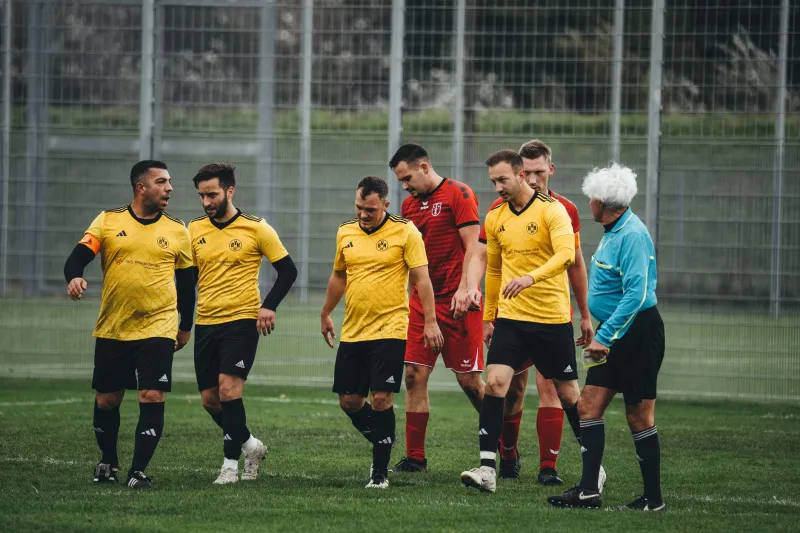
Picture this: a forward goes down with a knock in the 38th minute. Referee signals for the medical team. Suddenly you've got 90 seconds, maybe two minutes, where nothing is happening on the pitch.
For fans watching on FirstKick Live, that's a bathroom break. For the coaching staff on both benches, it's a strategy session.
The head coach isn't watching the injured player get treatment. He's scanning the opposite end of the field, watching where the opposing players drift when they're not being told what to do. Where does the left back wander? Does the number 10 jog back toward midfield, or does he hang high and wait? Does the goalkeeper bark at his defenders, or does he go quiet?
Those habits — the unconscious ones that surface when nobody thinks the clock is running — tell a complete story about how a team is actually organized versus how they want you to think they're organized.
"Stoppages are when players revert to instinct," one MLS assistant coach explained in a recent coaching seminar. "They stop performing the system and just be themselves. That's when you learn who they really are."
Broadcasters Are Finally Catching On
For a long time, TV coverage treated dead ball moments like dead air. Cut to a commercial. Run a graphic. Show the replay of the foul that caused the stoppage. Anything to fill the silence.
But there's been a real shift happening in how smart broadcast teams handle these pauses — and it's changing how fans actually consume the game.
The better productions are now keeping cameras wide during stoppages, letting viewers see the full shape of both teams resetting. Analysts are talking through positioning, pointing out the gaps that just opened up, flagging the substitution warmup happening on the far sideline that most people completely missed because they were watching the ball.
That's the kind of real-time context that makes a broadcast feel genuinely intelligent rather than just loud. And it's the exact type of coverage that separates a great stream from a forgettable one.
The Replay Review Loophole
If injury stoppages are a coaching gold mine, VAR reviews and replay stoppages are practically a free timeout — and the teams that use them best have a serious competitive edge.
In the NFL, the replay challenge system has been studied obsessively from a tactical standpoint. Coaches don't just challenge plays they think they can win — they challenge plays strategically, buying their offense or defense time to regroup, giving a quarterback who just took a hit an extra 90 seconds to clear his head, letting a defensive coordinator reset his personnel without burning a timeout.
Soccer's VAR process works differently, but the principle holds. When the referee jogs to the pitchside monitor, experienced coaches immediately go into overdrive. Tactical boards come out. Specific players get pulled aside for quick individual instructions. Shape adjustments get communicated before play resumes.
The teams that use those windows well — that treat every stoppage as structured prep time rather than dead air — consistently outperform expectations in the final 20 minutes of matches. It's not a coincidence.
What Stillness Does to Pressure
There's another layer to this that doesn't get talked about enough: the psychological dimension.
When a game is flowing, pressure is distributed. Players are moving, reacting, surviving. But when play stops — especially in a high-stakes moment, like a video review after a potential game-tying goal — the pressure has nowhere to go. It just sits there, in the stadium, on the bench, inside every player's chest.
How a team handles that stillness is incredibly revealing. Do they stay tight as a unit, keeping close to each other, communicating? Or do they scatter, each player retreating into their own head, staring at the turf?
You can see this play out in real time if you know where to look. And the teams that consistently perform well in clutch moments almost always show better collective composure during stoppages. They've practiced it. They treat the pauses as part of the game, not interruptions to it.
How to Watch Differently Starting Right Now
Next time you're streaming a match on FirstKick Live and the referee stops play, resist the urge to grab your phone. Instead, pull back and watch the whole screen.
Where does each team's shape collapse to? Who's talking to whom? Which coach is furiously gesturing from the sideline, and which one is standing completely still, just watching? Is the goalkeeper organizing his backline, or does that responsibility fall to a center back?
You'll start to notice things that 90 minutes of open play will never show you clearly. The tactical identity of a team. The real leadership hierarchy. The pressure fractures that are about to crack wide open.
The dead ball isn't a break from the game. It's the game, stripped of its costume, standing right there in front of you.
You just have to be willing to look.