No Huddle, No Mercy: How College Football's Tempo Game Is Rewriting the NFL Playbook
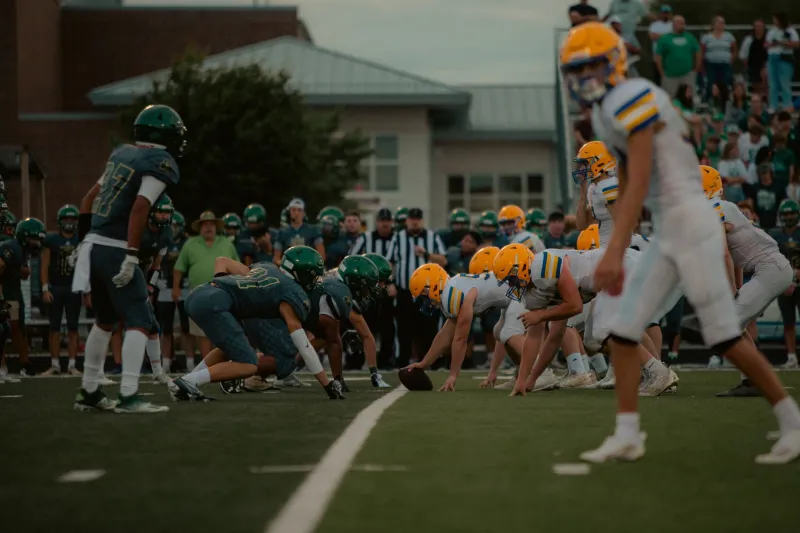
There's a moment that happens in football — at every level — that most casual fans don't notice but every defensive coordinator dreads. It's when an offense snaps the ball before the defense has finished communicating. Before the linebacker has relayed the coverage call. Before the corner has set his alignment. Before anyone is truly ready.
In college football, that moment happens constantly. On purpose.
For decades, the no-huddle offense was a desperation move — something teams broke out when they were down two scores in the fourth quarter and needed to manufacture urgency. Then coaches like Chip Kelly at Oregon and Gus Malzahn at Auburn turned it into a philosophy, a full-game identity, a weapon deployed from the opening snap. College football became a laboratory for tempo as a tactical tool, and what those experiments produced has been slowly, inevitably bleeding into the NFL.
The bleed is becoming a flood.
What "Tempo" Actually Means (And Why It's Terrifying)
Tempo in football isn't just about going fast. That's the surface-level reading. What it's actually about is information denial.
When an offense huddled, defenses got roughly 25-30 seconds to observe personnel groupings, communicate adjustments, set alignments, and make sure everyone understood their assignment. That time was enormously valuable. Defensive coordinators essentially had a free consultation period before every snap.
A true tempo offense eliminates that consultation period. The offense lines up, reads the defense for maybe four seconds, and snaps the ball. The defense doesn't have time to substitute. Linebackers can't finish their communication. A safety who was supposed to rotate into a different coverage is still mid-step when the ball is already in the air.
The result isn't just physical fatigue — though that's real, particularly for defensive linemen who can't rotate as freely. It's cognitive overload. Defensive players are making split-second decisions they'd normally have half a minute to think through. Mistakes compound. Assignments break down. Suddenly a defense that looked disciplined in the first quarter is giving up easy completions in space because someone was simply in the wrong place.
The College Blueprint
If you want to understand where the NFL is heading, watch any game from the Pac-12's peak era or a modern Big 12 shootout. These offenses weren't just fast — they were systematically fast. Every element was designed to stress the defense's ability to process and communicate.
Chip Kelly's Oregon teams ran upward of 85-90 plays per game at their peak. The tempo wasn't random; it was calibrated. They'd vary the pace deliberately — sprint to the line on one snap, then slow down on the next to let a tired defensive lineman think he was getting a breather before hitting him again. It was psychological warfare dressed up as offensive football.
What made the college version so effective was also what made NFL teams initially dismiss it: the personnel. College offenses could thrive on tempo partly because they faced less sophisticated defenses and could get away with simpler route concepts. NFL defenses, the thinking went, were too well-coached and too athletic to be rattled by pace alone.
That assumption has aged poorly.
The NFL Teams That Are Actually Doing It
The Buffalo Bills under Josh Allen have become the most prominent example of a team using tempo not as a situational tool but as a core identity. When the Bills want to take control of a game's rhythm, they don't huddle. They don't give the defense time to breathe. Allen's ability to process information quickly and get the ball out fast makes the whole system work — but it's the system that deserves the credit, not just the quarterback.
The Cincinnati Bengals have developed something similar with Joe Burrow, whose natural pace and comfort with quick reads makes him almost uniquely suited to a tempo-based attack. Watch a Bengals drive that's clicking and you'll notice how rarely they give defenses the chance to fully reset. It's not accidental.
Even more traditional organizations have started incorporating tempo elements. The Miami Dolphins under their current staff have used it specifically in short-yardage situations, where the defense's substitution disadvantage is most acute. Getting a linebacker on the field when you want a nickel corner, or keeping a tired defensive end out there for one more snap — those are the margins that tempo exploits.
Defensive Coordinators Are Losing Sleep Over This
Ask any defensive coordinator in the league what keeps them up before a game against a tempo offense and they'll give you some version of the same answer: substitutions.
The NFL has rules about when offenses have to allow defensive substitutions, but those rules have enough gray area that a well-designed tempo attack can legally limit how often a defense gets to rotate. That means your nickel package — the one you've spent all week preparing for their third-down personnel grouping — might never get on the field in a clean, prepared way.
The defensive response has been to build more versatile rosters. Teams facing tempo-heavy offenses are prioritizing players who can play multiple positions and don't need extensive pre-snap communication. The New England Patriots' defensive philosophy under Bill Belichick was always built around this kind of positional flexibility — players who could line up in multiple spots and make adjustments on the fly. In hindsight, that was partially future-proofing against exactly this trend.
Other teams have gone the opposite direction, doubling down on defensive tempo of their own — getting aligned and communicating faster, essentially trying to win the speed contest rather than avoid it. It works sometimes. It also creates its own set of errors when players rush their communication.
What This Means for Live Viewing
For anyone watching games on FirstKick Live, tempo shifts are one of the most exciting in-game dynamics to track in real time. There's a tangible momentum change when an offense decides to go fast — you can feel the defense tighten, watch the communication break down, see the coordinator on the sideline frantically signaling adjustments that may or may not arrive before the next snap.
It's also one of the better live betting signals available. When a tempo offense gets rolling in the second half, points tend to come in bunches. The defense isn't just tired — it's disorganized. A team that's been held to field goals all game can suddenly rattle off back-to-back touchdowns in four minutes of game time when they commit to pushing the pace.
Tracking which teams flip into tempo mode and when — down and distance, score differential, time remaining — is a genuine edge for anyone paying close attention.
The Gap Is Closing
The NFL has always been slower to adopt college innovations than it probably should be. The spread offense took years to migrate north. The RPO (run-pass option) was treated like a novelty before becoming standard. Tempo is following the same path.
What's different this time is the data. Teams can now quantify exactly how much tempo affects defensive efficiency, track which personnel groupings break down fastest under pressure, and build offensive systems specifically designed to exploit those vulnerabilities. It's not just going fast for the sake of going fast anymore.
The college game handed the NFL a weapon. The NFL is finally learning how to use it.