The Hidden Clock: Why Your Sports Stream Is Living in the Past and What You Can Actually Do About It
It happens to everyone. You're watching a match at a sports bar, phone in hand, when your buddy texts you "GOAAAAAAL" — and the ball hasn't moved on the screen in front of you yet. A few seconds later, the crowd erupts. On screen, that is. The actual crowd erupted ten seconds ago.
Welcome to broadcast latency — the invisible gap between what's happening on the field and what you're seeing on your device. It's one of the most quietly frustrating parts of modern sports fandom, and it's way more complicated than most people realize.
The Journey Your Signal Takes
Let's start at the beginning, because the path from a player's foot hitting the ball to that image appearing on your screen is genuinely wild.
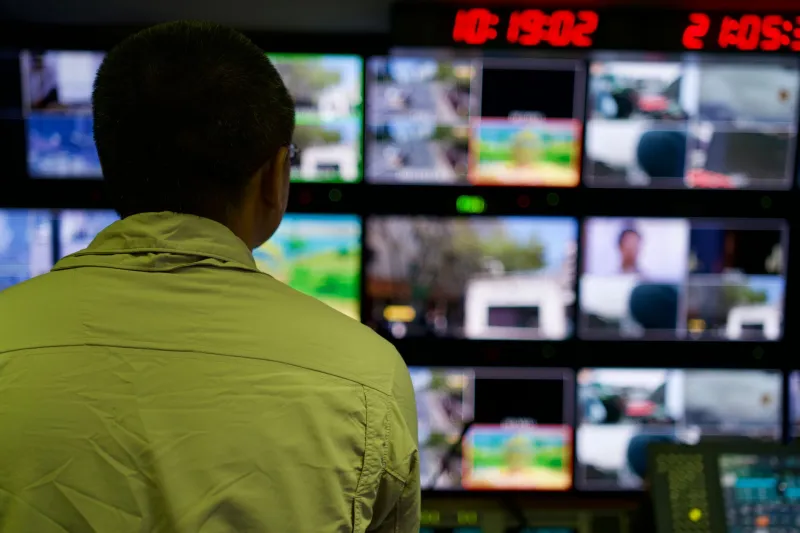
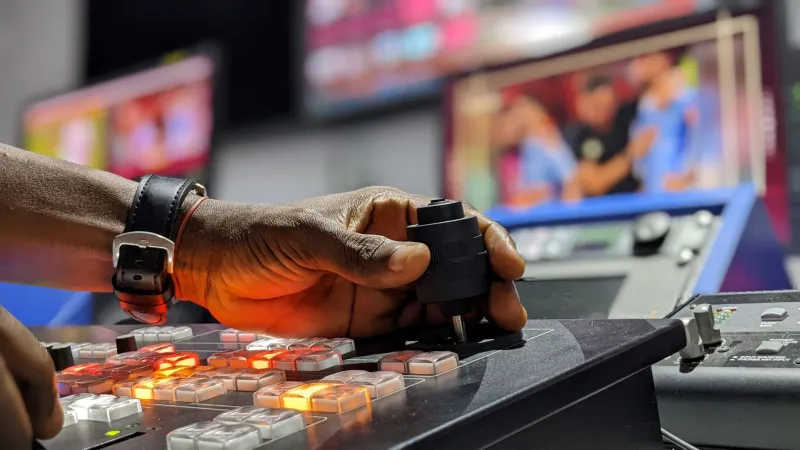
At the stadium, cameras capture the action and feed it to an on-site broadcast truck. That signal gets encoded — compressed into a format that can actually be transmitted — and sent via satellite or fiber connection to a broadcast center, often located hundreds or even thousands of miles away. At that center, it gets processed again, potentially mixed with graphics and commentary, then pushed out through distribution networks to cable providers, satellite dishes, or streaming servers.
Each one of those steps takes time. Not much time individually, but it stacks up fast.
"People think of broadcast as a single pipe from point A to point B," says a broadcast engineer who has worked with major sports networks across the US. "It's actually more like a relay race with six or seven runners. Every handoff costs you a fraction of a second."
Cable vs. Streaming vs. Social: The Latency Breakdown
Here's where things get interesting — and a little controversial. Not all delivery methods are equal, and the differences are significant enough to actually change your experience.
Traditional cable TV is generally the fastest option for American sports fans. The signal travels through a relatively direct path with minimal re-encoding steps. Most cable broadcasts sit somewhere between 5 and 10 seconds behind live action.
Streaming apps — including ESPN+, Peacock, Paramount+, and Apple TV+ for MLS — introduce additional latency because of a process called adaptive bitrate streaming. Your app is constantly adjusting the video quality based on your connection speed, which requires it to buffer small chunks of video ahead of time. That buffer adds anywhere from 15 to 45 seconds of delay depending on the platform and your network conditions. YouTube TV, in particular, has been flagged by users for delays that frequently push past 30 seconds during high-traffic events.
Social media clips — those unofficial streams or highlight clips that circulate on Twitter/X and TikTok — can vary wildly, but they're almost always delayed even further due to additional compression and platform processing.
In practical terms, if you're watching a Premier League match on cable and your friend is streaming it on ESPN+, they could be watching a completely different minute of the game.
The Sports Bar Problem
This creates a genuinely strange social environment in American sports bars, which have become the unofficial gathering place for soccer fans in particular. Most bars mix cable feeds with satellite feeds across multiple screens, and if you've got a sharp eye, you can sometimes spot the same game playing slightly out of sync on two different TVs in the same room.
For big events — the Super Bowl, World Cup matches, Champions League finals — bars have started getting intentional about which source they use. Some have even started asking their AV vendors specifically about latency, something that would have seemed absurd five years ago.
"We had an incident during a World Cup knockout match where people at the bar were hearing reactions from people watching on their phones before the goal showed on our screens," recalled one sports bar manager in Chicago. "It completely killed the moment. We switched our setup after that."
Why This Matters Even More for Bettors
If you're into live sports betting — and the market for in-game wagering has exploded in the US since PASPA was overturned in 2018 — broadcast delay isn't just an annoyance. It's a genuine problem.
Sportsbooks receive data feeds that are significantly closer to real-time than any consumer broadcast. That means by the time you see a penalty being awarded on your stream and try to place a live bet, the book already knows about it and has either moved the line or suspended betting entirely. The asymmetry is real, and it's built into the system.
Some platforms have started experimenting with "low latency" streaming specifically designed for bettors, promising sub-5-second delays. Whether those claims hold up under real network conditions is another question entirely.
What You Can Actually Do
Okay, so what are your options if you want to get as close to real-time as possible?
Stick to cable or satellite if you can. It's not glamorous advice in a cord-cutting era, but it's the most reliable path to a lower-latency experience.
Hardwire your streaming device. WiFi introduces its own variability. An ethernet connection won't eliminate streaming latency, but it reduces the fluctuation that makes it worse.
Check your streaming app's settings. Some apps, including certain versions of the ESPN app, offer a "low latency" or "live" mode that reduces buffering at the cost of occasional quality dips. It's worth enabling.
Mute social media during live events. This one's behavioral, not technical, but it works. The spoiler experience is mostly self-inflicted.
The broadcast industry knows this is a problem, and there's genuine investment happening in low-latency streaming infrastructure. But for now, the hidden clock is still ticking — and it's running a little behind yours.