The Millisecond Problem: How Live Stream Lag Is Quietly Reshaping Sports Betting in America
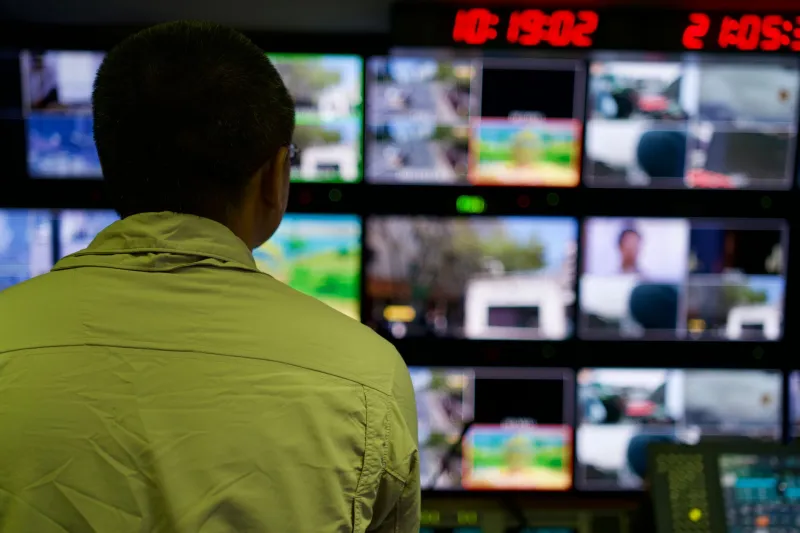
Let's say you're watching a soccer match on your laptop. The striker steps up to take a penalty. You see the ball hit the back of the net. You jump off the couch. And somewhere, before you've even processed what you just watched, a betting algorithm has already placed — and settled — a wager based on that exact moment.
That's not a hypothetical. That's Tuesday night in the American sports betting market, and it's a problem that's been quietly growing since legal wagering expanded across the US following the 2018 Supreme Court ruling. The gap between what a casual fan sees on their streaming app and what a professional bettor sees on a low-latency data feed can be anywhere from a few seconds to nearly a minute. And in that gap, a lot of money changes hands.
What "Latency" Actually Means — and Why It's Not Simple
Latency is just the delay between something happening in the real world and you seeing it on a screen. Every step in the broadcasting chain adds a little bit of it: cameras capturing the action, encoding the video signal, sending it over satellite or fiber, decoding it on a content delivery network, and finally pushing it to your device.
For traditional cable broadcasts, that delay typically runs between 5 and 15 seconds. For streaming platforms — your Peacock, your Paramount+, your Apple TV+ MLS Season Pass — it can balloon to 30, 45, or even 60 seconds depending on network conditions, device type, and streaming protocol.
Sportsbooks that offer live, in-play betting don't use those consumer streams to run their operations. They use official data feeds from leagues and data providers — companies like Sportradar and Stats Perform — that transmit event data with latency measured in milliseconds, not seconds. The gap between those two streams is where the problem lives.
"It's not a bug in the system," says one former trading analyst at a major US sportsbook who asked not to be named. "It's a structural feature that sophisticated bettors have been exploiting since in-play markets opened up. The books know about it. The leagues know about it. Everyone's just kind of hoping regulation catches up."
The Sharps, the Feeds, and the Arbitrage Window
Professional bettors — "sharps" in industry language — have built entire operations around this latency gap. The setup isn't particularly exotic: subscribe to multiple broadcast feeds (including international feeds that sometimes carry lower latency), run them alongside official data streams, and use automated software to identify moments where the sportsbook's live odds haven't yet updated to reflect what just happened on the pitch.
A penalty is awarded. The official data feed registers it. The sportsbook's odds engine starts recalculating. But the market hasn't closed yet — there's a brief window, sometimes just a second or two, where you can bet on a team to score at odds that haven't accounted for the incoming spot kick. That's the arbitrage. And at scale, with enough capital and enough automated speed, it's extremely profitable.
This practice, sometimes called "courtsiding" in its manual form (where a person physically at the event relays information faster than broadcasts can), has evolved into something far more sophisticated and far harder to detect. Software does the heavy lifting now.
"We're not talking about people cheating," says Dr. Angela Tran, a sports technology researcher at a Midwest university who has studied in-play betting markets. "They're using publicly available information faster than other people can. The ethical question is whether the infrastructure should allow that gap to exist at all."
What the Platforms Are (and Aren't) Doing
Streaming platforms have a complicated relationship with this issue. On one hand, they're not in the sports betting business and have no formal obligation to minimize latency for bettors' sake. On the other hand, as more platforms pursue exclusive sports rights deals — think Amazon's NFL Thursday Night Football package, or Apple's MLS deal — the question of broadcast latency becomes harder to ignore.
Low-latency streaming technology exists. Protocols like WebRTC and LL-HLS (Low-Latency HTTP Live Streaming) can reduce stream delays to under two seconds under ideal conditions. Some platforms have started implementing them for live sports, though rollout has been inconsistent and often dependent on a viewer's internet connection quality.
The NFL and NBA have both engaged in conversations with their broadcast partners about standardizing latency levels for games that have active in-play betting markets. Progress has been slow. The technical challenge of delivering low-latency streams at scale — we're talking millions of concurrent viewers — is genuinely hard, and the business incentive for platforms to solve a gambling problem isn't exactly top of mind.
Sportsbooks, for their part, have implemented their own countermeasures: suspension windows around high-probability scoring events, bet delay timers that hold wagers for a few seconds before acceptance, and AI systems designed to flag suspiciously timed bets. But these measures are imperfect, and sophisticated operators have learned to work around them.
The Regulatory Blind Spot
Here's where things get murky. Sports betting is regulated at the state level in the US, and most state gaming commissions have focused their oversight on fairness in the traditional sense — ensuring odds aren't manipulated, payouts are accurate, and operators are licensed. The question of latency arbitrage exists in a gray zone that most regulatory frameworks weren't built to address.
New Jersey, Nevada, and a handful of other states have started to ask questions about data integrity and feed standardization, but comprehensive federal-level guidance is essentially nonexistent. The American Gaming Association has acknowledged the issue in industry forums, but concrete standards remain elusive.
"The regulation is always going to lag behind the technology," says the former sportsbook analyst. "That's just how it works. By the time a rule gets written, the people exploiting the gap have already moved on to the next thing."
What It Means for the Casual Fan
If you're just watching your team play on a Saturday afternoon and maybe throwing down a live bet or two for fun, this probably isn't costing you much directly. The latency problem primarily affects the sportsbooks' bottom lines — and they build that risk into their margins.
But there's a broader concern worth paying attention to. As in-play betting becomes a bigger share of the overall US sports wagering market — it already accounts for a majority of handle in mature European markets — the integrity of those markets matters more. If sharp operators consistently extract value from structural inefficiencies, books respond by tightening limits on casual bettors or widening margins. The average fan ends up with worse odds.
At FirstKick Live, we cover sports in real time — every goal, every foul, every wild finish as it happens. We know better than most how much a single second can change everything in a live sporting event. The technology that delivers those moments to you is getting faster, but the gap between what different viewers see — and what that gap enables — is a story that's only going to get bigger as American sports betting continues to grow.
The milliseconds matter. And right now, not everyone's watching the same clock.